Tote Placepot Betting and Pool Dividend Payouts
 Available in US
Structuring Six-Race Permutations for Tote Placepots
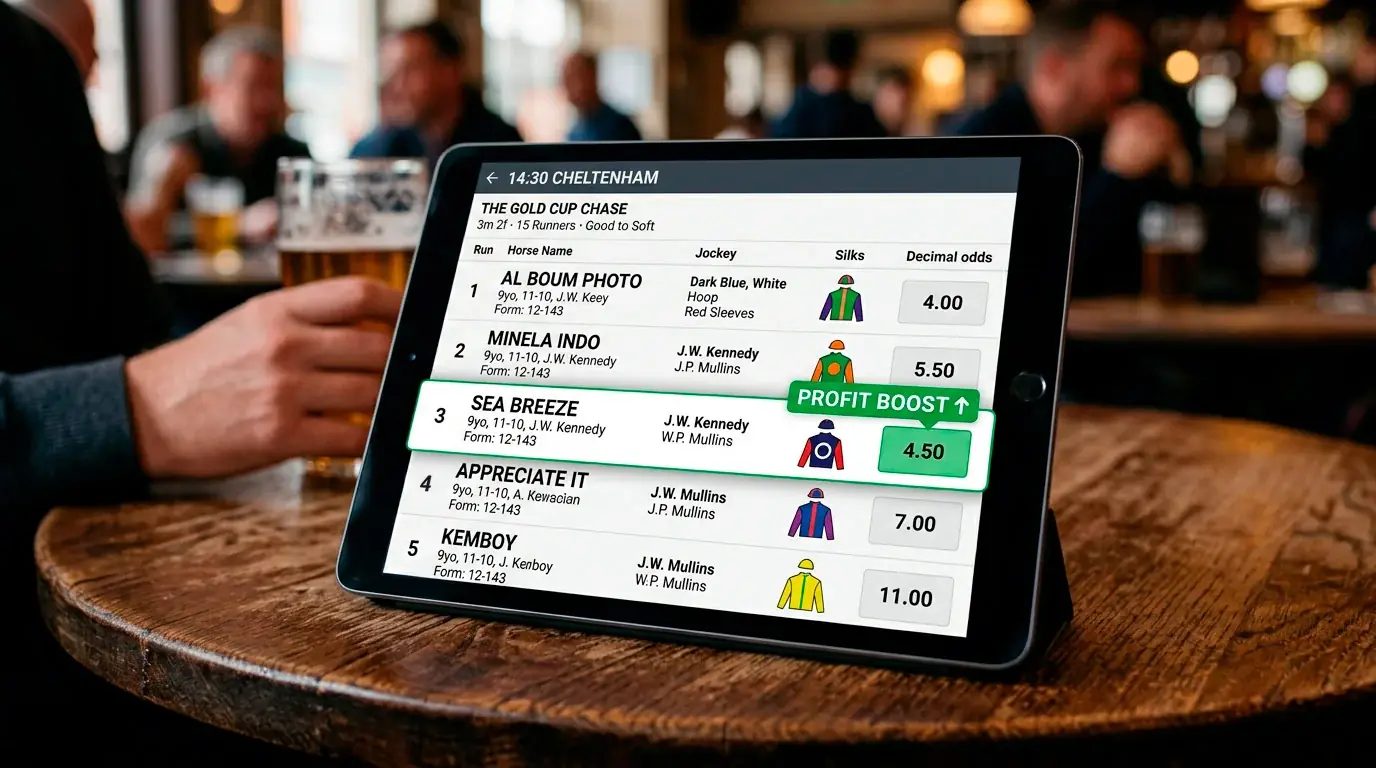
The Tote Placepot is one of those bets that sits in a strange middle ground between a serious value proposition and a ticket-of-the-day entertainment wager. The mechanic — pick a horse to place in each of the first six races of a meeting, collect a share of the pool if all six horses finish in a paid place — is technically elegant. The execution is a different matter. Permutations across fields that average nine to eleven runners pick produce stake totals that escalate fast, pool takeouts of around 27 per cent eat into dividend maths, and the vast majority of UK welcome and reload free bets explicitly exclude the Tote from eligibility. The Placepot is the pool bet most commonly misused by casual punters trying to deploy tokens on it and finding the stake rejected at bet placement.
The Tote-adjacent scale is meaningful within UK racing economics. The Gambling Commission’s £766.7 million remote GGY figure for UK horse racing betting in 2024-25 is predominantly fixed-odds. Tote pool betting sits in a separate reporting category with its own commercial structure and different product economics. The 1,460 UK fixtures scheduled in 2025 all offer Placepots, but pool sizes vary dramatically by meeting — from a few hundred pounds on midweek Wolverhampton all-weather cards to half-a-million-pound pools on Cheltenham Thursday and Saturday afternoons at major summer meetings.
This piece walks through the Placepot ticket structure, permutations and stake scaling, typical dividend ranges, the reality of free bet eligibility (mostly exclusion), pool sizes at big festivals, and the decision framework for when a Placepot is worth the outlay.
The Placepot ticket structure
The Placepot is defined against the first six races of a specific meeting. The punter selects one horse per race to “place” — meaning finish in a paid-place position under the race’s standard place terms (typically 2 places in 5-7 runner races, 3 in 8-15 runner races, 4 in 16+ runner handicaps). If all six selected horses place, the ticket wins a share of the Placepot pool. If any selected horse fails to place, the ticket is a losing bet.
The place-terms structure matters substantially. A Placepot requires six consecutive place outcomes from the punter’s selections, which sounds achievable but compounds quickly against the punter. A horse with a 30 per cent chance of placing gives a six-race sequence probability of approximately 0.073 per cent, or about 1-in-1,400. Mixed probabilities across six races produce different combinations, but the base-rate difficulty of the bet is substantial.
The daily pool starts with a seed contribution from the Tote itself plus the stakes added by each participating punter. By the time the first race goes off, the Placepot pool has accumulated its full participant contribution and is fixed for the rest of the afternoon. The pool does not grow during the meeting — winning tickets share what was in the pool at the start, minus takeout. No additional mid-meeting contributions feed into the Placepot.
Permutations and stake scaling
The per-line stake for a Placepot can be as low as 10p at most UK operators, with a typical minimum of 50p per line. The single-line ticket — one horse per race across six races — is the cheapest ticket format at 10p or 50p. Multi-line tickets cover multiple horses per race, which scales the line count multiplicatively.
The permutation arithmetic. A ticket with two horses in race 1 and one horse in each of races 2-6 generates 2 × 1 × 1 × 1 × 1 × 1 = 2 lines. A ticket with two horses in races 1, 3, and 5, and one horse in races 2, 4, and 6 generates 2 × 1 × 2 × 1 × 2 × 1 = 8 lines. Scaling up to three horses per race across all six races — 3 × 3 × 3 × 3 × 3 × 3 = 729 lines — requires £72.90 total outlay at 10p per line, or £364.50 at 50p per line.
The permutation structure is where casual punters discover the Placepot’s cost escalation. A Saturday afternoon “multiple selections in each race” ticket aiming for coverage across several obvious candidates can produce hundreds of lines and aggregate stakes of £50 or £100 before the punter has realised how the multiplication compounds. Racecourse Tote terminals display the running line count and total outlay as the punter builds the ticket, which helps, but online interfaces occasionally under-surface this during the pick sequence.
Typical dividend ranges
The Placepot dividend varies widely based on the pool size and the number of winning tickets. On a midweek Wolverhampton all-weather meeting where the pool is £500 to £2,000, the dividend per £1 unit staked ranges from £20 to £200 depending on whether favourites or outsiders made up the winning sequence. A favourite-heavy winning combination produces a small dividend because many tickets hit; an outsider-heavy combination produces a larger dividend because few tickets hit.
On weekend meetings with larger pools — £10,000 to £50,000 at a typical Saturday race meeting — the dividend range expands. £30 to £500 per £1 unit is common, with occasional jackpot-level dividends when a particularly unlikely combination wins. The variance is substantial but the expected-value profile is compressed by the 27 per cent takeout that the Tote deducts from the pool before distribution.
At festival meetings — Cheltenham Thursday, Royal Ascot Saturday, Grand National day — pools routinely exceed £500,000. Winning dividends on these pools can reach £5,000 to £20,000 per £1 unit when the winning combination is sufficiently unlikely. The attraction is obvious — a £5 Placepot ticket hitting at a £5,000-per-unit dividend pays out at £25,000, which is the kind of number that dominates promotional coverage and gets casual punters engaged with the Tote for the first time.
Free bet exclusion — the reality
Stephen Parkinson, then-Minister at the Department for Culture, Media and Sport, summarised the structural relationship between racing and betting products in written evidence to the DCMS Committee: “Horseracing is interlinked with the gambling sector, as one of the most recognisable and popular products on which people gamble. Moreover, the way in which the fixture lists and race programmes are developed is directly affected by the need to provide a consistent betting product.” That framing is relevant to the Placepot eligibility question because pool betting operates on different commercial terms from fixed-odds, and the promotional ecosystems built around fixed-odds do not typically extend to the pool product.
Around 90 per cent of UK welcome offer free bet promotions explicitly exclude Tote pool bets, including the Placepot. The T&C language commonly states the free bet is applicable to “singles and accumulators on UK and Irish racing, excluding pool, Tote, and enhanced markets”. The exclusion is systemic across the industry rather than operator-specific, and it exists because the pool dividend cannot be predicted at stake placement — the same uncertainty problem that makes tote bets uninsurable from a promotional-liability perspective.
A small minority of operators allow free bet deployment on Placepots at their own platform when the Tote product is offered directly (as opposed to via a third-party aggregator feed). Where allowed, the free bet usually covers the aggregate line stake rather than individual lines, with SNR structure meaning only the winning-ticket dividend is paid, not stake returned. Check operator T&Cs carefully because the eligibility wording is specific and often hidden in the exclusions list rather than the positive-eligibility list.
Pool size at festivals
Festival Placepot pools are where the product’s economic tension is most visible. Cheltenham 2026 is projected to take £450 million wagered across the four days in fixed-odds markets, and Placepot pools at the major festivals scale proportionally. Cheltenham Thursday pools regularly exceed £500,000. The Grand National meeting’s Saturday Placepot sits in similar territory. Royal Ascot’s Saturday Placepot on the closing day of the meeting approaches the half-million mark.
All 28 races at Cheltenham 2025 finished in the top 31 UK races by turnover for the year, and the Placepot pools reflect the same concentration of betting activity. Punters who engage with the Tote only at festival meetings are rational actors — the pool sizes support dividends that are genuinely worth chasing, whereas midweek Placepots on small pools carry less attractive expected value despite the same takeout percentage.
The Placepot at a £500,000 festival pool with a 27 per cent takeout distributes £365,000 among winning tickets. If 50 tickets hit with an average £5 stake per ticket, each winning ticket is paying out approximately £7,300. If only 5 tickets hit, each pays £73,000. The variance in winning-ticket counts is what creates the festival-Placepot magic — the combination of a large pool and few winners can produce genuinely substantial individual dividends.
The decision framework — when to take a Placepot
My heuristic. Placepot makes sense on festival or major-meeting days where the pool exceeds £100,000 and the punter has informed views on at least four of the six races. Smaller pools (£500 to £10,000 meetings) make the ticket economically marginal — the dividend range does not compensate for the base-rate difficulty of hitting six consecutive places. Informed-view thresholds matter because blind-pick Placepots carry no edge against the crowd; the punter’s value comes from out-picking the average ticket-holder on some of the six legs.
The permutation discipline. A single-line 50p ticket at £0.30 outlay is a pure-variance bet. Multi-line tickets at reasonable per-line stakes (5p to 20p) distribute coverage without exploding the total outlay. I would rather pay £5 for a 100-line ticket at 5p per line than £10 for a 40-line ticket at 25p per line — the broader coverage increases hit probability more than the stake size concentrates payout on any single winning outcome.
The free bet question resolves almost always as “not for Placepots”. The eligibility exclusion is standard, and working around it is rarely worth the effort. A cash-funded Placepot on a festival Saturday is a legitimate ticket. A free-bet-funded Placepot is usually either rejected at placement or processed in ways that compromise the token’s value. How the 27 per cent Tote takeout compares on a like-for-like basis with exchange back-and-lay positions on the same six races is covered in my piece on the Betfair Exchange versus UK bookmakers comparison.
Reader questions on Tote Placepot mechanics
What happens to a Placepot if one of my selections doesn’t run?
Under Tote rules, a non-runner selection is replaced automatically by the race favourite at the off, with the replacement applying to all lines on the ticket that included the non-runner. If the original favourite is the non-runner, the second-favourite becomes the replacement. This automatic-substitution rule is specific to the Placepot and differs from fixed-odds bet handling where a non-runner leg would typically void the bet or drop from the multiplication.
How is the Placepot dividend different from a fixed-odds accumulator payout?
A fixed-odds accumulator pays a calculable return at bet placement based on the six multiplied prices. A Placepot dividend is derived from the pool after takeout, divided by winning tickets — neither of which is known at bet placement. The expected-value profile is different in consequence. Fixed-odds accumulators have the operator’s overround baked in (110 to 130 per cent per leg compounding across six legs). Placepots have a 27 per cent takeout applied once to the pool. The two products can pay substantially different amounts on the same set of winning selections.
Published by the Free Horse Racing Betting team.