Tote Double and Treble Pool Betting Markets
 Available in US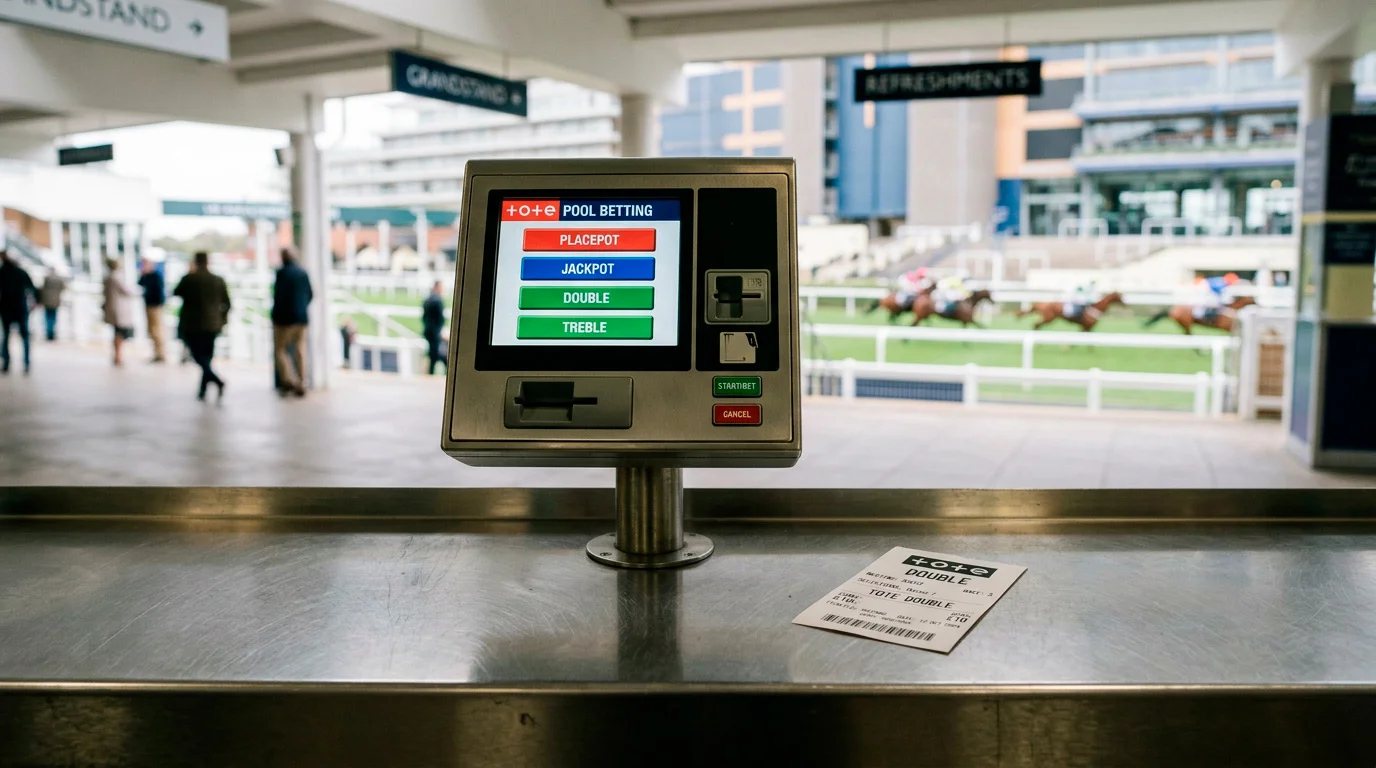
Table of Contents
- Calculating Dividends for Tote Double and Treble Bets
- Tote Double mechanics and the pool structure
- Tote Treble and the volatility amplification
- Why free bets are almost universally excluded from the Tote
- Pool size and dividend mechanics on big pools
- Tote versus the fixed-odds accumulator — when each wins
- Reader questions on pool betting
Calculating Dividends for Tote Double and Treble Bets
There is a category of UK racing bet that operates on fundamentally different economic principles from the fixed-odds market most punters spend their time in. The Tote — now operated by the UK Tote Group following the transfer from the historic state-run Horserace Totalisator Board — is a pool betting system where stakes from every punter are combined into a common pot, the operator’s takeout is deducted, and the remainder is distributed among winning tickets. There are no bookmaker-set odds. The “price” of a pool bet is derived from the pool itself, calculated after the race is over. And roughly nine in every ten UK welcome offer free bet tokens cannot be used on it.
The £766.7 million remote Gambling Commission figure for gross gambling yield on UK horse racing in the 2024-25 financial year covers bookmaker-style fixed-odds betting. Tote pool betting sits outside that headline, reported separately in the regulator’s statistical frameworks and operated under different commercial terms. The economic model is closer to a lottery than a sportsbook, with a fixed percentage takeout — typically 16 to 27 per cent depending on the pool — replacing the bookmaker overround as the mechanism through which the operator earns.
This piece covers the Tote Double and Tote Treble specifically — the two-race and three-race pool products that most closely resemble standard accumulator bets — and the reasons almost every UK welcome free bet offer excludes them from eligibility.
Tote Double mechanics and the pool structure
A Tote Double is a two-race pool bet where the punter selects a horse to win in each of two nominated races. If both selections win, the ticket is entitled to a share of the Double pool. The share is calculated by dividing the pool (net of takeout) by the number of winning tickets. If only one ticket wins, that ticket takes the entire net pool — which is why Tote Double dividends can sometimes be extraordinarily large when the winning selections are long-priced outsiders.
The mathematics is not fixed-odds. Let us say the Tote Double pool for the 2:15 and 2:45 at Newbury collects £2,400 in total stakes. The Tote’s takeout on Double pools is typically around 27 per cent, so £1,752 remains for distribution. If 12 winning tickets are returned, the dividend per £1 unit is £146. A punter holding a single £1 Tote Double ticket on both winners collects £146 — a dividend that, in fixed-odds terms, would equate to implied combined odds of 146.0 across the two runners. Depending on the actual starting prices, this can be dramatically higher than a fixed-odds double on the same selections, or dramatically lower.
The variance is the key feature. Pool dividends fluctuate with the number of winning tickets and the stake concentration. On a race where the favourite wins, the pool splits across thousands of tickets and the dividend is small. On a race where an outsider wins and the pool concentrates on a handful of tickets, the dividend can be in the hundreds or thousands per pound. Fixed-odds bookmakers cannot replicate this variance profile because they are hedging their exposure in real time; the Tote simply distributes what the pool contains.
Tote Treble and the volatility amplification
The Tote Treble works identically to the Tote Double but across three nominated races. The pool is separate from the Double pool, the takeout rate is typically the same band of 22 to 27 per cent, and the winning-ticket count is smaller because the pick-three probability is lower than pick-two on comparable races. Dividends are correspondingly larger on average but more volatile.
On an average midweek UK Treble pool, a handful of winning tickets often collect a disproportionate share of a £1,000 to £3,000 pool. Dividends of £200 to £800 per pound are common. On festival Trebles — Cheltenham Thursday, for example — pools of £20,000+ are routine and winning tickets can collect £2,000+ on a successful three-leg pick.
The Treble is the purest expression of the pool-versus-bookmaker tension. A standard fixed-odds three-leg accumulator on the same selections at the same starting prices will always have a calculable return — the multiplication of the three odds — and the operator will have hedged their exposure accordingly. A Tote Treble cannot be calculated in advance because the dividend depends on the final pool size and the number of winning tickets, neither of which can be known before the third race is settled.
Why free bets are almost universally excluded from the Tote
The exclusion is structural, not arbitrary. A fixed-odds free bet is an obligation with a known maximum liability — the operator knows the worst case on a £10 SNR free bet is a payout at the longest price they offered, which they can calculate to the penny in advance. A Tote stake is an obligation with unknown liability because the dividend is not set at placement.
Simon French, Director of Orange County Services, made the broader point about promotional integrity and market confidence at the 2026 Illegal Gambling Prevention Summit: “Affordability is the biggest issue, but my biggest concern is not that it’s driving people away — it’s how do you get them back? Even if you were to just do away with all noise around affordability checks and frictionless and whatever else, the horse has already bolted.” That framing is relevant here because the promotional-eligibility question is downstream of the same commercial anxiety — operators structuring their offers conservatively to manage cost and avoid downstream regulatory exposure, which includes ring-fencing free bets from pool-betting products where the liability tail is harder to manage.
The practical mechanism. When a free bet token is placed on a fixed-odds market, the bookmaker knows the stake-not-returned structure means the maximum payout is (stake × (odds – 1)). On a £10 free bet at 20.0, that is £190. Predictable, hedgeable. When a free bet token is placed on a Tote Treble, the operator has no mechanism to predict what the dividend on that ticket will be because the pool has not yet been resolved. If the punter’s Treble hits at a £4,000-per-pound dividend, the free bet’s effective payout is £40,000 minus the SNR deduction — a £39,990 liability on a £10 token. No promotional budget can absorb that variance, so the simplest response is blanket exclusion.
Pool size and dividend mechanics on big pools
The pool size question matters more on the Tote than in fixed odds because the takeout is calculated as a percentage of the pool, not as a per-bet margin. A small pool with few bettors carries the same percentage takeout as a large pool, but the per-ticket dividend is more volatile because small absolute stake shifts affect the winning-ticket count disproportionately.
On the larger UK pools — Cheltenham, Grand National, Royal Ascot — the Tote takes upwards of £500,000 on the main Double and Treble products across a festival meeting. At that scale, the dividend calculation stabilises because the winning-ticket count becomes more predictable and the pool variance dampens. A Cheltenham Thursday Tote Double on the two feature races with the favourite winning one and a mid-priced runner winning the other will typically return a dividend in the £15 to £60 per pound band — still comparable to fixed-odds returns but with meaningful variance.
Rollover mechanics on Doubles and Trebles differ from those on Jackpot and Scoop6 products. The Double and Treble pools do not carry rollover balances — if no ticket wins, the pool is returned to stakeholders as refunds under specific rules. Most fixed-odds accumulator free bets place the entire stake on the combined bet, so a refund from the Tote requires additional reconciliation logic that most operators prefer to avoid — again pushing in the direction of Tote exclusion from free bet eligibility.
Tote versus the fixed-odds accumulator — when each wins
Given the blanket exclusion of most free bets from Tote markets, the practical decision for cash-staked punters is whether to take the Tote Double or the fixed-odds double on the same two selections. The two routes differ in three dimensions: implied odds, variance, and guaranteed return.
Implied odds tend to favour the Tote on medium-priced selections because the 22 to 27 per cent takeout is leaner than the combined overround on a fixed-odds double at 115 per cent per leg (which compounds to about 132 per cent across two legs). The same selection combination will, on average across many bets, pay out more through the Tote Double than through the fixed-odds double. The catch is the “on average” framing — individual Tote dividends vary more than individual fixed-odds settlements, so the punter takes on more single-bet variance in exchange for a better long-run expected value.
The guaranteed-return framing favours fixed-odds when stake size is meaningful and the punter wants certainty. A £100 fixed-odds double at 5.0 × 4.0 pays exactly £2,000 on a winning outcome. The same £100 Tote Double could pay anything from £800 to £3,500 depending on the pool composition — worse in expected value on some settlements, better on others. For punters who care about the specific cash outcome of a single bet, fixed-odds pays. For punters who care about long-run expected value and are comfortable with variance, the Tote pays. Similar variance-versus-certainty trade-offs show up across every UK racing bet type — win-only, each-way, and pool alike — and the full settlement map is covered in my piece on each-way bet settlement rules.
Reader questions on pool betting
Why do most UK welcome offers exclude Tote pool bets?
The exclusion is driven by the dividend-unpredictability of pool products. A free bet token placed on a fixed-odds market carries a calculable maximum liability, which operators can absorb into their promotional budget. A Tote pool bet has no pre-calculable maximum payout because the dividend depends on pool size and winning-ticket count, both unknown at stake placement. Blanket exclusion is the simplest way for operators to cap their exposure on pool products.
How is the Tote dividend calculated after takeout?
The Tote deducts a fixed percentage takeout from the gross pool — typically 16 to 27 per cent depending on the specific product, with Doubles and Trebles at the higher end of that range. The remaining net pool is divided by the total winning-ticket units. The resulting figure is the dividend per £1 unit staked. A punter holding a £5 Tote Double ticket on a pool paying £40 per pound collects £200 total.
Created by the ”Free Horse Racing Betting” editorial team.