Cheltenham Gold Cup Free Bets and Friday Offers
 Available in US
Table of Contents
- Claiming Friday Promos for Cheltenham Gold Cup Bets
- The Friday turnover spike and why promos cluster there
- Gold Cup-specific promotional patterns — who pushes what and when
- When BOG actually activates for the Gold Cup
- The Hunters’ Chase as a side-event worth attention
- Ante-post Gold Cup and the NRNB question
- Reader questions on Gold Cup promo timing
Claiming Friday Promos for Cheltenham Gold Cup Bets
Cheltenham Gold Cup Friday is the single most concentrated day of UK racing betting in the annual calendar. More money flows through more markets in tighter time windows than on any other Friday of the year, and the promotional pressure from bookmakers scales with it. Every major operator runs an enhanced promotional schedule specifically for Friday, not for the full festival — and the timing of when each individual offer opens and closes is where smart punters extract value and distracted punters miss it.
The wider scale sets the context. The Cheltenham Festival 2026 is projected to take £450 million wagered across four days, according to William Hill trading staff in their own media briefings, and all 28 races of Cheltenham 2025 finished in the top 31 highest-turnover UK races of the year. That stake density is concentrated in the afternoon blocks on each of the four racing days, with Friday’s Gold Cup card absorbing the largest single-day share — on my own tracking, Friday typically accounts for 30 to 35 per cent of the full festival turnover despite representing 25 per cent of the racing days.
This piece covers the Friday turnover spike in context, the Gold Cup-specific promotional patterns each major operator runs, when Best Odds Guaranteed actually activates for the Gold Cup itself, why the Hunters’ Chase deserves attention, and how to approach ante-post free bets on the Gold Cup weeks before the race runs.
The Friday turnover spike and why promos cluster there
Operators cluster their heaviest promotional spend on Friday because that is where the returning punter-for-a-day shows up in volume. The total UK racing betting turnover for 2025 ran 4.2 per cent below 2024 and 12.8 per cent below 2023, which means operators fighting for a shrinking volume pool have concentrated their promotional pressure at exactly the points where the occasional-punter audience peaks. Cheltenham Friday is the biggest such peak in the jumps calendar.
The Friday effect is structural. Thursday finishes with the Stayers’ Hurdle — a big race in its own right but not the headline event. Friday opens with a full card of supporting races, builds through the Hunters’ Chase and the Foxhunter, and culminates with the Gold Cup at around 3:30 in the afternoon. The build-up is deliberate, and the promotional calendar is built to exploit it. Operators push their biggest boost offers onto Friday morning, run Extra Places on every supporting race, and schedule their highest-BOG-spend hour to overlap with the Gold Cup itself.
The 2026 Racing Report tracked 5.031 million racecourse attendance across UK tracks in 2025, the first time above 5 million since 2019, with a 4.8 per cent rise on 2024. A substantial share of that attendance concentrates at Cheltenham Friday specifically — probably close to 70,000 on-course spectators on Gold Cup day alone. The operators see the same demographic pattern reflected in online account activity, with hundreds of thousands of dormant accounts reactivating specifically for the festival and Friday being the reactivation peak.
Gold Cup-specific promotional patterns — who pushes what and when
The main promotional categories that escalate specifically for the Gold Cup. Extra Places on the supporting Friday races — the Triumph Hurdle, the County Hurdle, the Hunters’ Chase, the Foxhunter — are pushed hard, with some operators offering 1/5 odds place terms to 5 places on handicaps that normally pay 4 places at 1/4 odds. That is a meaningful lengthening of the place payout structure and it is specifically timed for the Friday supporting card.
Price boosts and super-boosts cluster around the Gold Cup itself, usually released between 10am and 11:30am on Friday morning. The operator has calibrated overnight to the ante-post positioning and the declarations, and releases their promotional boost to capture the morning attention window before punters have had a chance to study the card properly. The boosts run until the off or until the advertised stake limit is hit — which on Gold Cup day can happen in minutes on the more aggressive offers.
Free bet tokens — the classic “Bet £10 Get £30” welcome offer restructured for festival eligibility — are pushed through the Tuesday-to-Friday window but with a modest uplift on Friday specifically. The eligibility criteria are usually looser on Friday, with some operators dropping the minimum odds from 1.5 (1/2) to 1.25 (1/4) on qualifying stakes to capture short-priced favourite bets that would not qualify in normal promotional conditions.
When BOG actually activates for the Gold Cup
Best Odds Guaranteed on the Gold Cup is not continuous. The industry-standard activation time for BOG on UK racing is 8am on the day of the race, but several operators extend earlier coverage on headline festival races. The pattern I have tracked over recent festivals runs roughly like this. Sunday before the festival: BOG is typically not yet active on the Gold Cup. Monday through Wednesday: a handful of operators offer BOG from the morning of each respective day on the next-day races. Thursday: BOG activates on the Gold Cup at a small number of operators from about 4pm on Thursday. Friday: BOG activates universally across all major operators from 8am on Friday morning.
The earlier activation window matters because Thursday evening is when a meaningful share of Friday stake flow actually happens. Punters placing bets overnight for Friday racing are locked out of BOG at operators whose activation is Friday morning only. The operators who run Thursday-evening BOG on the Gold Cup are effectively paying for early-session stake flow, and it shows — their Gold Cup turnover tends to run 15 to 25 per cent higher than operators holding BOG back to Friday morning.
Punters should also note the BOG-free-bet interaction. Best Odds Guaranteed does not usually apply to free bet tokens. A Gold Cup free bet taken on Friday morning at a board price of 6.0 on a runner that drifts to SP 8.0 will settle at 6.0, not 8.0. The BOG uplift is reserved for cash stakes, and the exclusion is universal across UK operators. If you have a free bet to spend on the Gold Cup and BOG matters to your expected value, consider splitting the stake — part as cash (BOG applies), part as the free bet token (BOG does not).
The Hunters’ Chase as a side-event worth attention
The Hunters’ Chase, run roughly two races before the Gold Cup, is a side-event for the general public but a serious betting race for the industry. It is also the race that sits inside one of the more interesting statistical oddities of the festival — not all the fancied runners are familiar to casual racing fans, and the field is large. Historically it is the seventh-biggest betting race of the festival by turnover, despite the relative obscurity of its runners outside the hunter-chaser community.
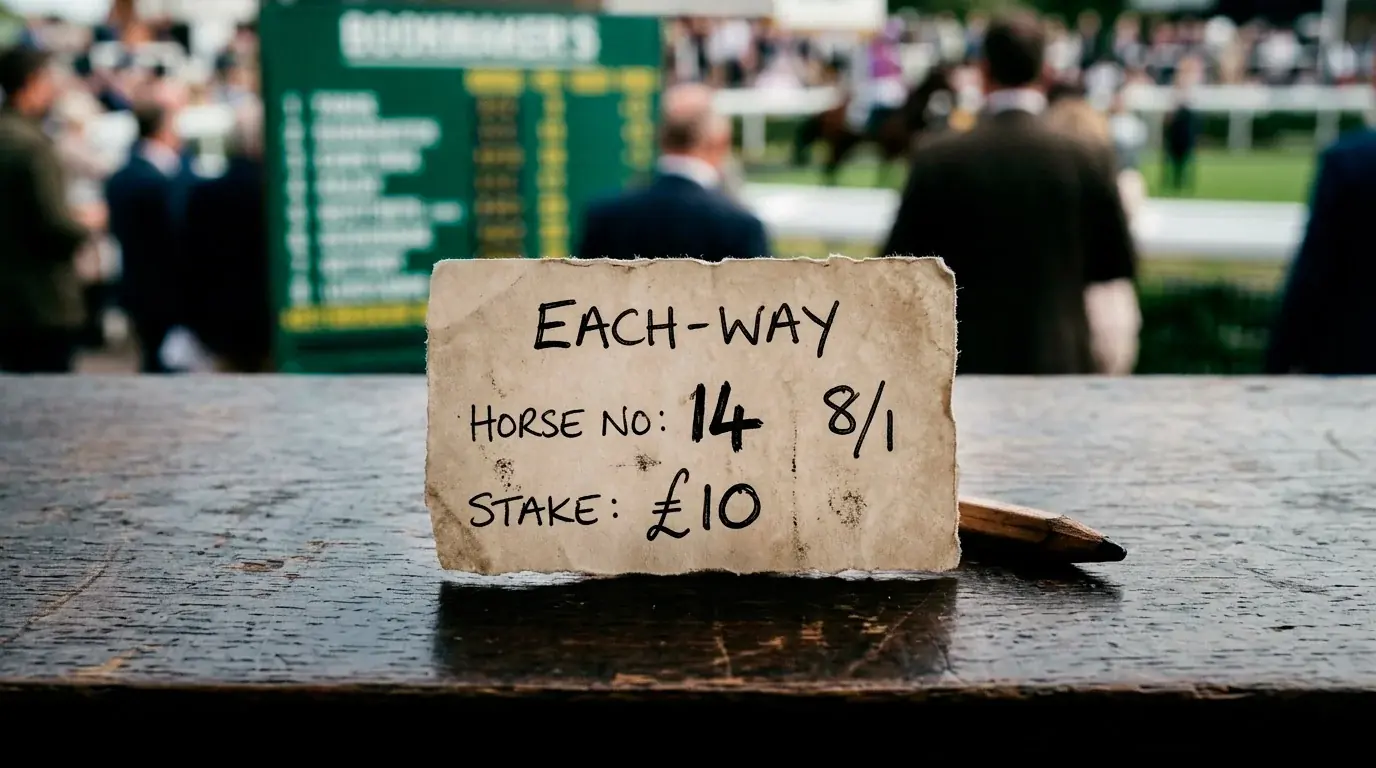
The promotional pattern on the Hunters’ Chase is that Extra Places are essentially universal — every major operator offers enhanced place terms on the race because the field size and the amateur-jockey composition create a higher variance of outcomes than a standard graded chase. A 4-place-at-1/4-odds structure on a typical 20-runner Hunters’ Chase, lengthened promotionally to 5 or 6 places at the same fractional odds, is a meaningful value uplift for each-way punters.
The race also carries a structural promotional oddity. A handful of operators treat the Hunters’ Chase as eligible for non-runner no bet ante-post positions, because withdrawals are common among the amateur hunter-chaser fraternity. That means an ante-post each-way free bet taken two or three weeks out on the Hunters’ Chase, at a longer price than the runner would eventually go off at, can be insulated against the runner failing to turn up. NRNB coverage is not universal, and checking it before committing a token is essential.
Ante-post Gold Cup and the NRNB question
Ante-post betting on the Gold Cup is a long-running market — the best runners are typically priced up by early January, two months before the race. Ante-post prices are thick with overround at that stage, and the Horseracingbookmakers analysis puts ante-post overrounds on feature races at up to 180 per cent versus the 110 to 130 per cent on same-day fixed-odds markets. That is a considerable implied-probability margin for the bookmaker, reflecting genuine uncertainty about the line-up.
Non-Runner No Bet is the structural feature that makes ante-post betting viable for punters. NRNB means that if the runner does not run in the race — withdrawn by connections, failing to make the declaration, injured in the weeks before — the stake is refunded. Without NRNB, an ante-post stake on a runner that gets pulled is lost entirely. The Gold Cup ante-post market typically has NRNB apply from early January through to the declaration deadline on the Monday before the race, but it varies by operator and the specific offer terms.
Free bets placed ante-post on the Gold Cup carry extra complexity. The token is tied to the specific ante-post bet, and if the runner is a non-runner the stake-refund logic varies. At operators with standard NRNB coverage, the free bet token is re-credited to the account balance with the original expiry period restarted. At operators with quirkier T&C handling, the token may be forfeited on a non-runner despite NRNB applying to the cash stake element. Ante-post free bets on the Gold Cup are something I treat with extra caution — the layered complexity of promotional T&Cs, ante-post mechanics, and NRNB interactions creates more failure modes than same-day free bets on the day itself. For the broader context of festival free bet promotions, see my piece on Grand National and festival free bets.
Reader questions on Gold Cup promo timing
When is Best Odds Guaranteed typically activated for the Gold Cup?
The industry-standard activation is 8am on Friday morning, which is the day of the Gold Cup. A handful of operators extend BOG coverage back to Thursday afternoon or evening to capture overnight stake flow on Friday racing. A very small number offer BOG from the Monday of the festival on the Gold Cup specifically, which is the earliest systematic activation in the UK market for a Class 1 race.
Can I use a free bet ante-post on the Gold Cup weeks before the race?
Yes, but check the specific operator’s T&Cs carefully. Ante-post free bets on the Gold Cup are usually allowed at standard free bet operators but require Non-Runner No Bet coverage to protect against a runner withdrawing before the race. Not every ante-post market at every operator applies NRNB, and the free bet token re-credit logic on a non-runner varies by promotion. Ante-post free bets carry more layered complexity than same-day tokens.
Written by the editors at Free Horse Racing Betting.