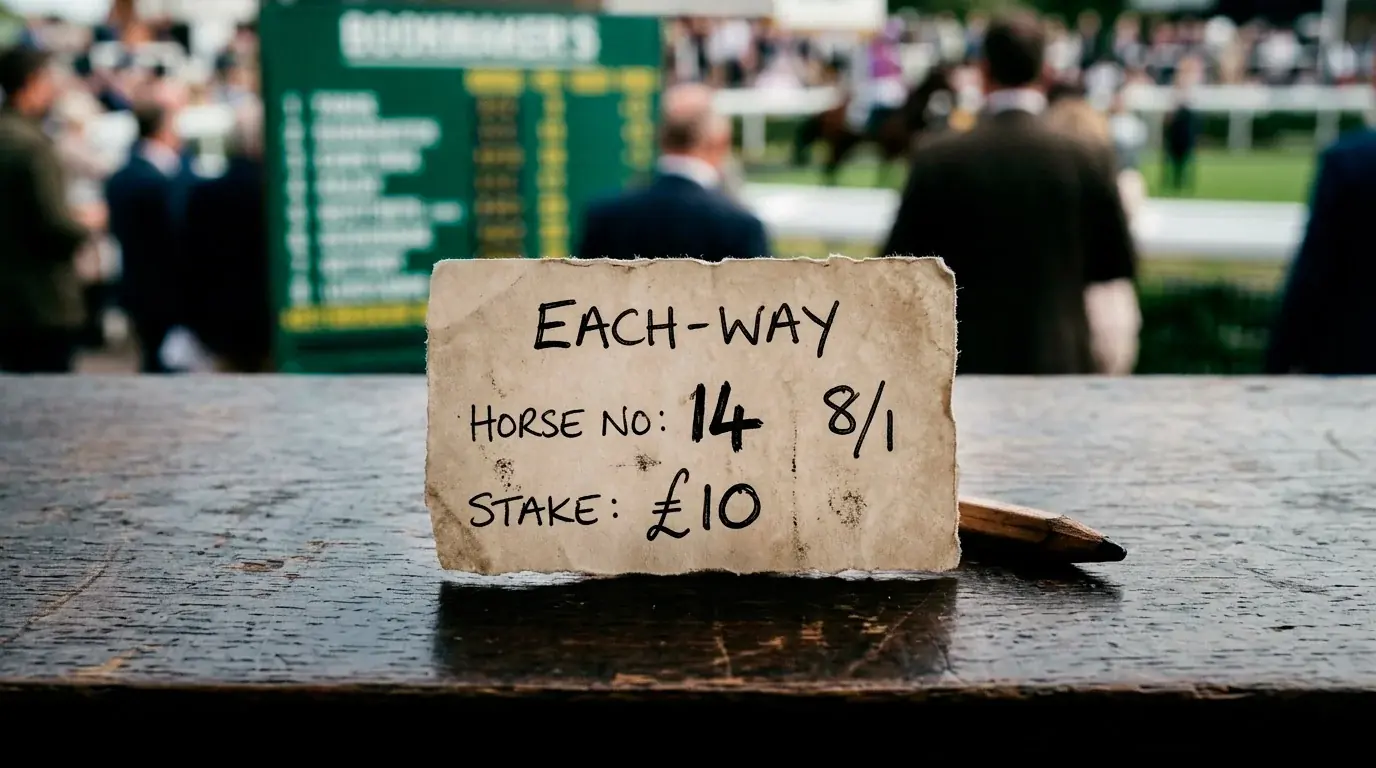
King George and Boxing Day Racing Free Bets
 Available in US
Table of Contents
- Claiming Holiday Promos for King George Boxing Day Races
- Kempton on Boxing Day and the King George VI Chase
- The Welsh Grand National at Chepstow — the parallel fixture
- Advent-calendar holiday promos
- New Year fixture density — 27 December to 2 January
- Free bet scheduling across the holiday block
- Reader questions on Christmas and New Year racing promos
Claiming Holiday Promos for King George Boxing Day Races
Boxing Day racing at Kempton Park is the clearest break in the jumps calendar between the autumn build-up and the Cheltenham countdown in the new year. For one afternoon in late December, the King George VI Chase assembles something close to a mini-festival field — Gold Cup horses running at Christmas, shorter-field competitive markets, a Christmas-day television audience watching racing as part of the bank-holiday domestic routine. The promotional intensity from operators rises to match, and a punter paying attention on 26 December can find the single best combination of jumps-racing quality and promotional density outside of Cheltenham itself.
The calendar context matters. The 2025 Racing Report tracked 1,460 scheduled UK fixtures across the year, and December to early January is one of the densest blocks in the calendar. Total racecourse attendance in 2025 hit 5.031 million across the full season, the first time above 5 million since 2019, and the Christmas fixtures pull a meaningful share of that annual figure. Operators deploy holiday promotional campaigns specifically for this block — the seven days from 26 December to 2 January typically carry more fixtures per day than any other week of the winter.
This piece covers the Kempton Boxing Day card and the King George VI Chase, the parallel meeting at Chepstow for the Welsh Grand National, the advent-calendar promotional structures operators run through December, the New Year fixture density, and how I think about scheduling free bet deployment across the holiday window.
Kempton on Boxing Day and the King George VI Chase
The Kempton Boxing Day card is a six- or seven-race meeting centred on the King George VI Chase, a Grade 1 three-mile chase that regularly assembles the best open-company jumping talent in Britain and Ireland. The race has been a December fixture at Kempton for decades and routinely attracts Gold Cup winners and contenders, making it the highest-quality Grade 1 race of the mid-winter calendar.
A William Hill trading-desk commentary in 2026 framed the operator perspective on mid-winter jumps racing in the context of the wider festival window: “The battle between us and the punters over the four days of the Cheltenham Festival is unrivalled in Jumps racing. We’re expecting around £450 million to be wagered over the four days, which makes it the most bet-on racing festival of the year.” The Boxing Day card sits in the shadow of that Cheltenham peak but nonetheless absorbs substantial mid-winter turnover — the King George itself is regularly among the top 20 UK betting races of the year, and the supporting card carries real competitive Graded racing around it.
Promotionally, Kempton Boxing Day is treated by operators as a feature-day with similar structural emphasis to a Saturday Ascot card — enhanced BOG coverage, handicap Extra Places, price boosts on the King George favourites. The scale is smaller than Cheltenham Friday but the promotional density per race is competitive. A free bet token deployed on Boxing Day at Kempton captures meaningful operator-side promotional spend against a card where the underlying form is high-quality enough to support considered value-hunting.
The Welsh Grand National at Chepstow — the parallel fixture
The Welsh Grand National at Chepstow runs on 27 December in most years — the day after the Kempton card, although the race has occasionally shifted to 28 December when weather has intervened. It is a three-mile-five-furlong handicap chase, the main contender for biggest single race of the Christmas period alongside the King George, and it attracts a different stake profile from Kempton because the 20-runner-plus handicap field creates large-handicap betting dynamics that the shorter King George fields do not.
The promotional mix on Welsh Grand National day tilts towards Extra Places on the feature race. Where Kempton Boxing Day is BOG-and-boost centric around Group-style competitive markets, Chepstow on 27 December is Extra Places centric around the handicap. A 22-runner field at Chepstow typically attracts 4-place-at-1/4-odds standard terms, extended promotionally to 5 or 6 places by the more aggressive operators. For each-way punters, the Welsh National day can be the higher-expected-value deployment than Boxing Day at Kempton.
The scheduling between the two meetings matters for punters spreading bets across the two days. Boxing Day’s King George gives a sharp Grade 1 betting market at around 3pm; Welsh National at Chepstow typically goes off at 2:30 or 2:45pm the following day. A free bet token with a 7-day expiry credited on Christmas Eve can cover both meetings; a token with a 48-hour expiry credited Christmas morning forces a choice.
Advent-calendar holiday promos
A promotional structure that has grown substantially across UK operators in recent years is the advent-calendar offer — a sequenced daily promotion running through December, often starting 1 December and building to the Boxing Day and New Year fixtures as the calendar’s centrepieces. The mechanic varies by operator, but the common structure is one small promotional credit per day, unlocked by a minimum daily stake or deposit.
The typical advent-calendar credit size runs £1 to £5 per day, totalling £30 to £100 across the full 24 or 31-day calendar. That total is genuine promotional value, but the per-day triggering mechanic often requires specific stakes or opt-in steps that reduce the effective conversion rate. A customer who claims every daily credit captures the headline total; a customer who misses days to holiday disruption captures only a fraction. My own tracking suggests typical customers claim 60 to 75 per cent of the daily credits available.
The underlying economics for operators is retention through the Christmas quiet period. December cash-stake volumes are lower than the festival peaks in October and November, and the advent-calendar structure converts seasonal dormancy into daily engagement at modest per-customer cost. A customer who stakes £10 each day through December to unlock daily credits is delivering £300 of qualifying turnover across the month — far more than the equivalent credit value issued.
New Year fixture density — 27 December to 2 January
The week between Boxing Day and the New Year carries the densest block of UK jumps fixtures of the winter calendar. Kempton Boxing Day, Chepstow’s Welsh Grand National, Wetherby for the Rowland Meyrick, Newbury for the Challow Novices’ Hurdle, Cheltenham’s New Year’s Day card with the Dipper Novices’ Chase — the list is longer than any other seven-day block in the jumps season. Operators know this and deploy promotional campaigns specifically for the dense fixture run.
The promotional implications run in two directions. The first — promotional fatigue sets in for punters across a dense fixture run, and marginal promotional spend on each individual day delivers lower engagement than on a standalone feature day. Operators respond by concentrating their heaviest promotional push on the Saturday and Sunday of New Year weekend, when the general public audience is largest. The midweek New Year fixtures are treated with lighter promotional coverage.
The second direction — value-hunting punters find the midweek New Year fixtures carry less sharp money in the markets than the weekend cards. A 2 January Wednesday meeting at Exeter carries softer markets than 3 January Saturday at Sandown, because less professional stake flow has engaged with the Wednesday cards. Free bet tokens deployed on the softer midweek markets can extract better expected value than tokens deployed on the sharper weekend markets, even though the weekend promotional density is higher.
Free bet scheduling across the holiday block
My framework for free bet deployment across 26 December to 2 January, given typical token expiries of 7 days and a pool of three or four tokens available through the period.
Boxing Day at Kempton — reserve one token for the King George itself. The combination of a Grade 1 race, heavy BOG coverage, and promotional boosts makes it the feature-deployment of the week. A £10 cash stake on the King George favourite with BOG applied typically outperforms a £10 free bet token on the same runner, so if cash is available and the account has BOG eligibility, the cash route is cleaner.
27 December Welsh Grand National at Chepstow — reserve one token for each-way deployment on the handicap with Extra Places promotion active. Target a mid-priced runner at 12.0 to 20.0 where the place terms create a materially uplifted probability-of-place position.
28 to 30 December midweek — deploy one token on the softest market across the midweek cards. This is the “value-hunting” token rather than the “promotional-feature” token. A Wednesday handicap at Uttoxeter or a Thursday conditions race at Haydock offers softer markets than the weekend equivalents.
31 December to 2 January New Year weekend — reserve the final token for Saturday or Sunday feature race where the combined Extra Places promotion and BOG coverage are at their peak. The Welsh Champion Hurdle at Chepstow on New Year’s Day or the Sandown Tolworth Hurdle on the following Saturday are both typical feature targets. How the Christmas block fits alongside the rest of the UK jumps calendar — and what budget operators typically reserve for each festival window — is covered more fully in my piece on Grand National and festival free bets.
Reader questions on Christmas and New Year racing promos
How long does the Boxing Day King George card typically last?
The Kempton Boxing Day card usually runs from around midday to 4pm, with six or seven races across the afternoon. The King George VI Chase itself is scheduled as the feature race at around 3pm, with supporting novice hurdles, mares’ races, and handicap chases filling the card around it. Weather disruptions in late December occasionally push the card back or force abandonment, but the standard structure has been stable for a decade.
Do UK bookmakers run advent-calendar free bet promos in December?
Yes, and the structure has become industry-standard in recent years. Most major UK operators run some form of sequenced daily promotional campaign through December, typically with small daily credits of £1 to £5 unlocked by minimum-stake triggers. The cumulative value across the full month can reach £50 to £100 of promotional credit, though missed days (holiday disruption) and minimum-stake requirements reduce the effective conversion rate for most customers.
Prepared by the Free Horse Racing Betting editorial staff.