Horse Racing Starting Price and BOG Promotions
 Available in US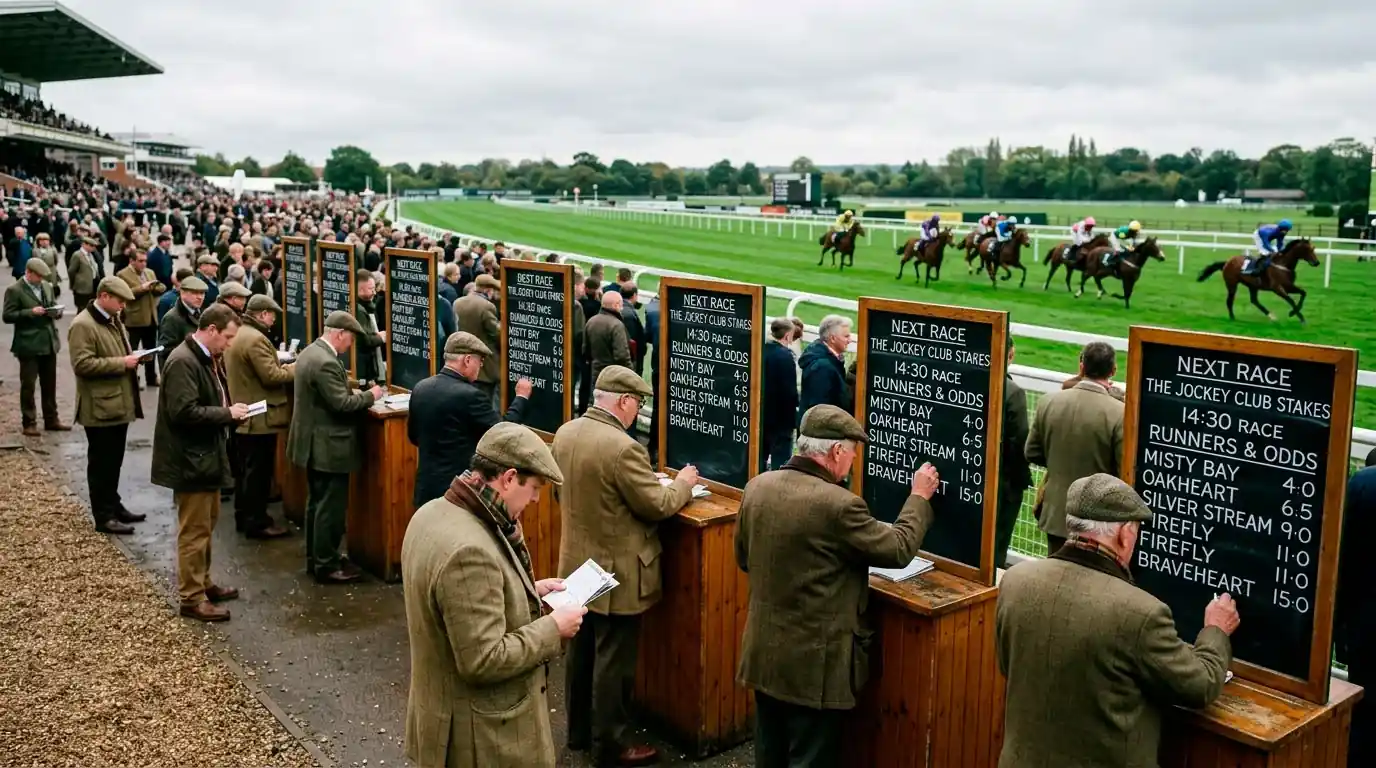
Table of Contents
Calculating Payouts Using the Horse Racing Starting Price
Ask a punter how the Starting Price on the 2:15 at Newbury is calculated, and nine times out of ten you get a shrug. It is not a mystery because it is complicated. It is a mystery because the process is nothing like the way other prices in UK betting are set. Morning prices are compiled by odds traders at their desks. Board prices move according to matched stake flow. Exchange prices adjust tick by tick against live liquidity. The Starting Price is none of these things. It is the average of what a rotating panel of on-course bookmakers is quoting in the seconds before the off, and it exists only at one precise moment in time.
For the 87.6 per cent of UK races that started within two minutes of their scheduled off in Q1 2025 — a punctuality figure that has climbed from 72.7 per cent in 2023 — that moment is almost always exactly when the racecard says it will be. The SP is compiled by a small group of on-course officials, the figure is wired into the industry data feed, and by the time the horses are away the price is permanent. It will never move again, it will never be edited, and it will be the settling price on every bet placed to run at Industry SP.
This piece walks through who is on the SP panel, how the formula actually works, when SP beats the board price and when it does not, and how the Best Odds Guaranteed promotion interacts with Starting Price to create the most common free bet adjustment in UK racing.
The on-course panel and the ring at the off
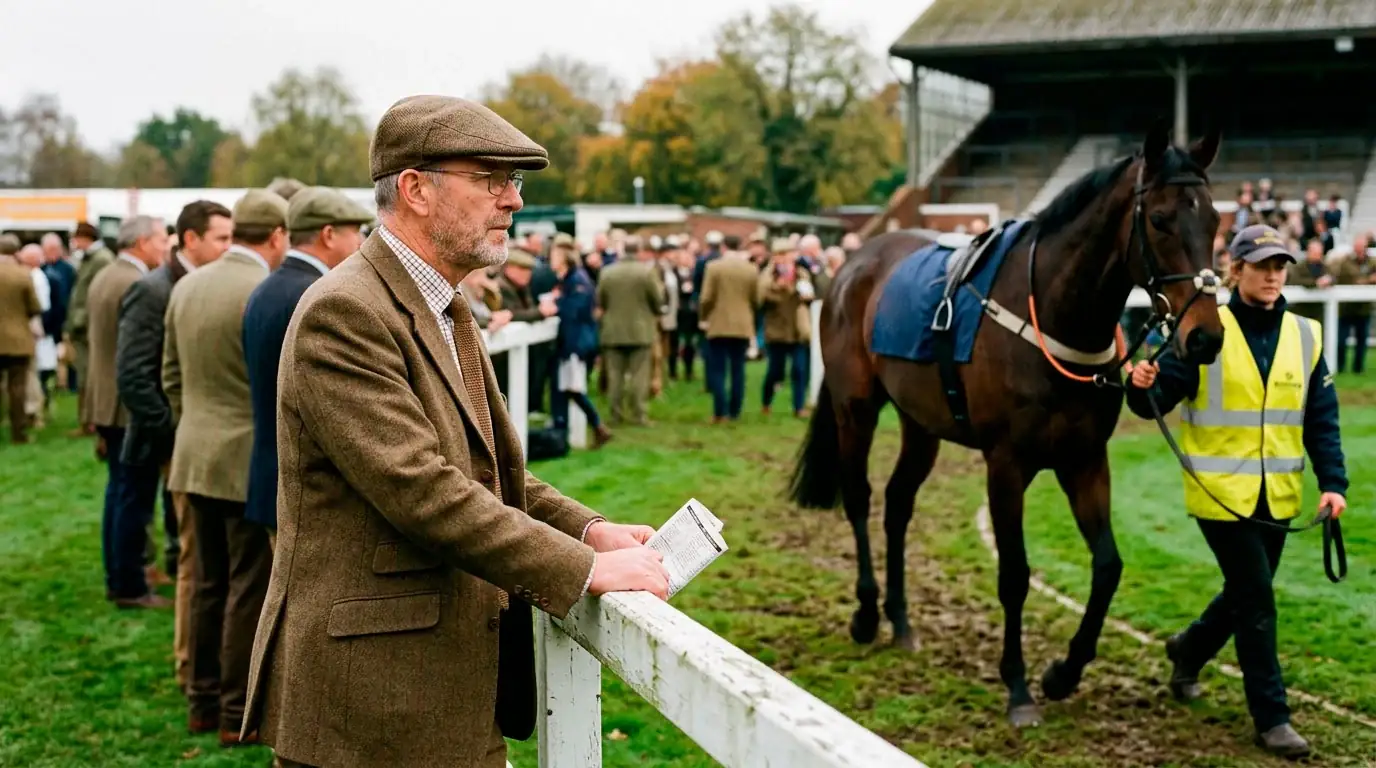
The SP is set by a panel of on-course bookmakers physically present at the racecourse. There is typically a sampling group of between eight and twelve individual pitches whose quoted prices are read off their boards in the final minute before the off by Press Association staff working from the ring. The sampling is not exhaustive of every bookmaker present — it is a representative subset selected for reliability and market-making discipline.
The physical process matters because it explains why SP behaves the way it does. On-course bookmakers are taking real money at their pitches, and their quoted prices reflect the stake flow they are seeing in the final minutes. A runner that attracts a late surge of cash from the ring gets shortened visibly as the bookmakers manage their books. A runner that fails to attract cash gets drifted, sometimes dramatically, in the last ninety seconds. The SP captures the consensus of these adjustments at the moment the race goes off.
The panel then reports to a central compiler. The reported prices are averaged using a specific algorithm — not a simple arithmetic mean, but a procedure that removes outlier quotes and weights by bookmaker reliability. The resulting figure is issued through the industry data feed within about thirty seconds of the off. For punters watching at home, the SP appears on the off-course board almost immediately after the race begins.
The industry SP and the online adaptation
For online bets placed to settle at SP, what you actually get is the Industry SP. This is the same panel-derived figure wired into the industry feed, and it is binding on every licensed UK off-course operator. If you place a bet “to run SP” at an online bookmaker, the settlement price will be the exact Industry SP to the fourth decimal place.
The Betfair Exchange runs a parallel concept called Betfair SP, which is compiled differently — it is an averaging of the unmatched back-and-lay money sitting in the exchange queue at the off, with additional weighting for recent matched price. Betfair SP is typically close to the Industry SP but not identical, and the 102 to 105 per cent overround on the exchange means Betfair SP has meaningfully different economic properties from the fixed-odds SP.
The distinction matters for anyone choosing between a bookmaker SP settlement and an exchange SP. On a typical handicap, Industry SP carries the fixed-odds overround baked in. Betfair SP carries only the exchange overround plus commission. A £10 free bet at SP settles at meaningfully different effective value depending on which SP you elected — often 3 to 5 per cent better on the exchange for a given runner.
SP versus the board price — when each wins
Every UK racing punter eventually has to decide: take the board price now, or run the bet to SP and see what the ring does? There is no universally correct answer, but there are situations where one is systematically better than the other.
SP tends to beat the board price when a runner is drifting in the market. A horse that is quoted at 4.0 in the morning, 4.5 on the board thirty minutes before the off, and which continues to drift in the ring, often ends up at 5.0 or higher at SP. Running the bet to SP captures the drift. This is a common pattern on second-favourites in handicaps where the weight of money has quietly moved onto a different runner through the afternoon.
The board price tends to beat SP on runners shortening in the market. A horse that firms from 6.0 to 4.5 over the afternoon is telegraphing that money is on it, and by the off the SP will likely be 4.5 or shorter. Locking in the 6.0 on the board an hour before the off preserves value that running to SP would evaporate. The 8am early-morning price from a bookmaker, locked before the market has developed, is often better than any price quoted in the final hour — and this is exactly what the Best Odds Guaranteed promotion is designed to formalise.
The rule of thumb I use. On a runner trading where I expected it to trade, take the board price. On a runner firming unexpectedly, take the board price now because SP will be worse. On a runner drifting, let it run to SP and capture the extra. On a short-priced favourite below 2.0, always take the board price — short-priced favourites almost always shorten further into the off, and SP will typically be the worst available price of the afternoon.
The BOG mechanism and how it interacts with SP
Best Odds Guaranteed is the promotional bridge between early-morning prices and the Starting Price. The mechanic: a bookmaker guarantees that if you take the morning or board price on a UK racing selection, and the SP ends up higher than the price you took, they will settle your bet at the SP instead. You cannot lose value to a drifting market.
The asymmetry is the whole point. A runner that firms in — shortens from 6.0 to 4.0 — settles at the 6.0 you took at placement, because BOG only pays up, never down. A runner that drifts — lengthens from 6.0 to 8.0 — settles at the 8.0 SP. The punter always gets the better of the two prices. In 2026, bet365 publicly stated they paid out more than £50 million in Best Odds Guaranteed enhancements across the four days of Cheltenham alone, which gives you some sense of how much economic value BOG represents at the industry level.
BOG applies to cash stakes placed at the advertised board price between a published start time (usually 8am on race day) and the off. The BOG umbrella typically does not cover free bet stakes — this is the tripwire that catches punters trying to compound promotional value. A £10 free bet taken at board price 6.0 on a runner that drifts to SP 10.0 will settle at 6.0, not 10.0. The BOG exclusion on free bets is universal across UK operators and worth naming on every promo.
When SP quietly crushes the punter
Short-priced favourites is the answer, and the explanation sits in the structure of the ring. A runner quoted at 1.5 in the morning, heavily fancied and carrying the weight of the day’s stake pattern, reliably shortens further in the final minutes. On-course bookmakers protect themselves against the obvious horse by quoting 1.4 or 1.33 in the ring, and SP collapses accordingly. Betfair Exchange prices on short favourites show the same pattern — implied probability at the off is almost always higher than the morning book suggested, because the market is aggregating the weight of informed money.
The corollary — running a bet to SP on a short-priced favourite is the single worst decision in UK racing punting. The board price of 1.5 taken an hour before the off almost always settles worse than it would have if you had locked the price. This is the pattern that motivates the common professional advice of never betting SP on favourites below 2.0.
Conversely, the punters who bet SP on outsiders — runners at 15.0 or higher — often find the SP settles better than the board, because outsiders drift as the market firms up on the horses attracting money. The SP bet on a 20.0 runner that went off at 28.0 captures eight points of value you could not have locked an hour earlier. For the broader settlement architecture that Starting Price sits inside, see my piece on the UK racing each-way bet settlement rules.
Reader questions on price derivation
How is SP calculated for races with very few on-course bookmakers?
On small meetings or at minor courses, the SP panel may contract to as few as four or five bookmakers. The compiler runs the same averaging algorithm with the reduced sample and publishes the resulting SP normally, though the variance of the published price against the board market is visibly wider on thin panels. Betfair SP often diverges more sharply from Industry SP on low-sample fixtures because exchange liquidity is also thinner.
Is SP ever higher than the morning price?
Yes — it happens whenever a runner drifts in the market. Horses that are initially priced on a compiler’s view but which fail to attract stake flow through the day often go off at prices meaningfully longer than their morning quote. Drifting runners are the systematic case where running a bet to SP outperforms locking in the morning price. A runner that was 8.0 at 8am and is 12.0 in the ring will almost always return an SP of 11.0 to 13.0.
Published by the Free Horse Racing Betting team.