Wagering Requirements for Horse Racing Free Bets
 Available in US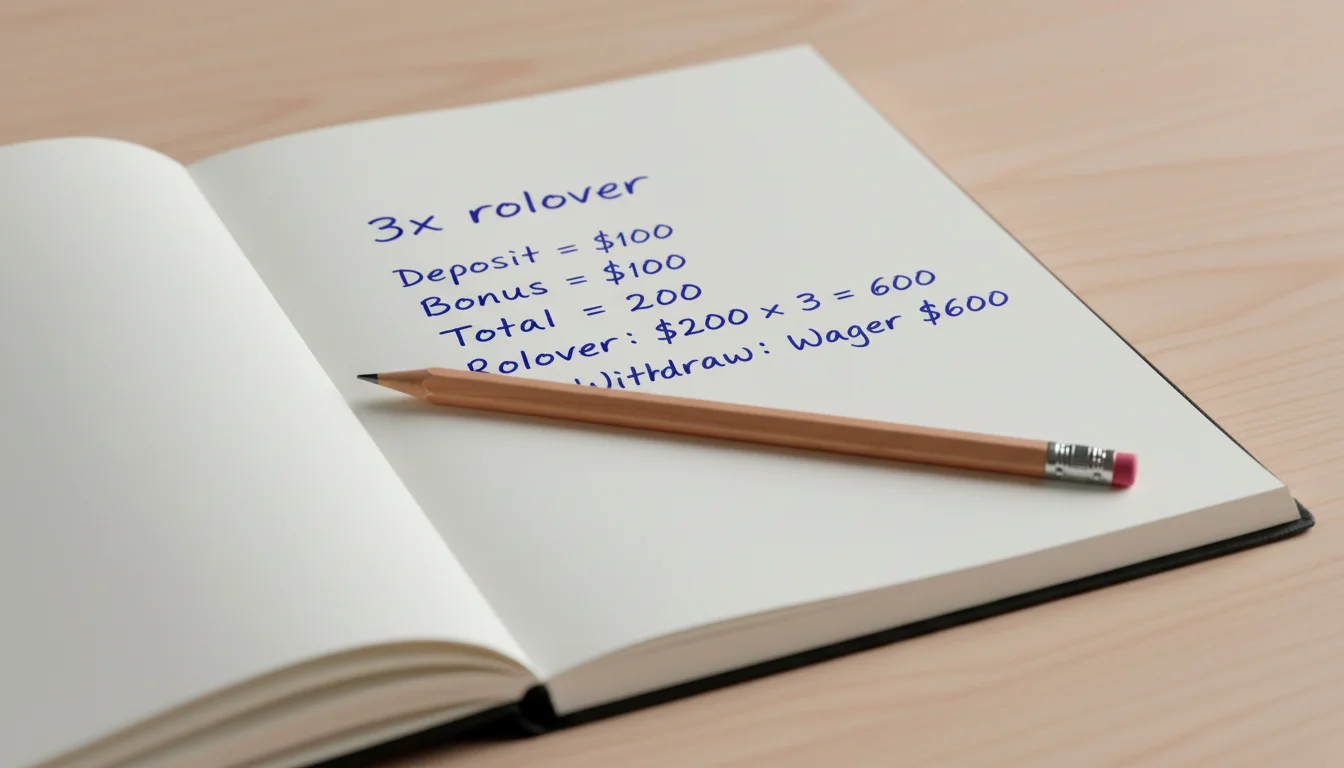
Table of Contents
Calculating Rollover Terms for Racing Free Bets
The first time I saw a wagering requirement attached to a UK racing free bet, I assumed someone on the promotions team had copy-pasted the wrong block of T&Cs. Wagering is a casino concept — the 30x and 50x turnover thresholds that govern slot bonuses — and it sat oddly on a £10 Get £30 sports promotion. Then I read the small print twice and realised the operator had imported a 3x rollover specifically to make the free bet winnings harder to withdraw without a second cash stake. That was around 2019. Today, a clear majority of UK racing free bet offers carry some form of wagering condition on the winnings, and most punters still do not read it.
The headline distinction to hold in your head before we get into the mechanics. Casino wagering applies to the bonus itself — you must stake the bonus X times before you can withdraw anything. Sports wagering, as it has evolved in UK racing, applies to the winnings of the free bet, not the free bet stake. The free bet is SNR — stake not returned — so the stake part is already gone by design. What remains is the profit, and the operator wants you to turn that profit over a specified number of times at minimum odds before it leaves the account as cash. Same language, different economic effect.
This piece covers the 1x, 3x, and 5x multiplier tiers, the contribution percentages that make racing and casino eligibility diverge, the odds floor that quietly doubles the effective turnover requirement, the time box on the rollover window, and a sequential £30 worked example that tracks the money end to end.
The 1x, 3x, 5x framework
UK sports wagering multipliers cluster around three numbers. 1x is the mildest — sometimes described in T&Cs as “turn over your free bet winnings once before withdrawal”. 3x is the mid-range standard, common on reload free bets and loyalty club tokens. 5x appears on the more aggressive promotions, particularly enhanced-odds markets where the operator has priced the offer assuming the punter will churn the winnings several times at the full overround.
The multiplier applies to the winnings, not the stake. Worked through — £10 free bet at odds of 5.0 returns £40 winnings (the stake does not come back). A 3x wagering requirement means £120 of additional turnover at minimum odds before the £40 can be withdrawn. That is not £120 of losing bets. It is £120 of stakes, whose outcomes are your own problem. You can stake £120 on one race and lose, fulfilling the wagering requirement in a single settled bet. Or you can stake across fifteen different races and fulfil it gradually. The bookmaker’s only stipulation is the cumulative turnover figure.
The 1x tier is economically close to a no-wagering offer for active punters. A weekly reload user who naturally places £80 across five days on eligible markets has already covered a 1x rollover on any £10 winnings credit they received during the week. The 5x tier is an entirely different creature — it can convert an apparently generous offer into a structure that effectively demands three or four times the nominal free bet value in additional turnover before the money is yours.
Contribution percentages — where racing quietly pays full rate
Every wagering requirement operates with a contribution schedule. Different market types contribute different percentages of the stake towards the rollover count. A £10 bet at 100 per cent contribution counts as £10 of wagering. The same £10 at 20 per cent counts as £2. The schedules matter because they determine how efficient your turnover is at clearing the requirement.
UK racing almost always contributes at 100 per cent on sports wagering rollovers. This is not a random choice. UK fixed-odds racing carries overrounds of 110 to 130 per cent on standard handicaps, which means the operator collects a predictable margin on every pound turned over. 100 per cent contribution on a product with a thick margin is safe for the bookmaker — every pound of rollover still generates expected revenue. Contrast with virtual racing, which usually contributes at 20 to 50 per cent, and pool bets like Tote exotics, which frequently contribute zero.
The contribution asymmetry is important because it forces racing punters who want to clear wagering quickly to stay in the markets they were already using. You cannot shift to a low-overround product — say, a Betfair Exchange back at 102 to 105 per cent — because the exchange is usually a separate product outside the rollover scope entirely, and the operator’s own low-margin markets such as Top Finisher often contribute at reduced rates. The money stays in the high-overround lane where the operator’s margin earns them out of the free bet promotional cost.
The minimum odds floor sitting underneath every rollover
This is the specification that changes a 3x wagering requirement into something that behaves like a 4.5x or 5x in real life. Almost every UK racing free bet rollover attaches a minimum odds floor to the qualifying turnover, typically 1.5 (1/2) or 2.0. A stake placed below that floor does not count towards the wagering calculation at all.
Why this matters. A punter holding £40 of unwashed free bet winnings on a 3x rollover needs £120 of qualifying turnover at minimum 1.5. In practice, the natural racing betting pattern at any meaningful stake size includes runners shorter than 1.5 — the obvious favourites on non-handicap cards, the short-priced placepot legs, the trap-betting singles. None of those count. The punter either cherry-picks runners above the odds floor, which narrows their universe and almost always means higher-variance selections, or they concede that a share of their usual stake pattern is now useless for wagering-clearance purposes.
The arithmetic costs most punters about 30 per cent extra turnover. A nominal £120 wagering target turns into roughly £155 of actual turnover once you account for the bets you would have placed naturally but which sit below the odds floor. That hidden tax is worth naming, because it is the single largest mechanism by which wagering conditions reduce the real value of a free bet promotion below its headline.
Time-boxed rollover windows
Rollovers are not open-ended. Every UK operator attaches an expiry to the wagering window — 7 days on the tighter offers, 30 days on the more generous. If the rollover is not completed within the window, the unbalanced free bet winnings are typically forfeited back to the bookmaker. Some operators take only the unrolled portion; others take the entire credited amount. Read the T&Cs.
The seven-day window is the one that catches weekly punters. A reload free bet credited on Tuesday with a 3x rollover on 7-day expiry needs the full £120-plus turnover cleared by the following Tuesday. If the bookmaker also places the free bet itself on a 7-day expiry, the punter is effectively being told “stake the token this week, stake the winnings into turnover next week”. A racing-only punter with a midweek-light stake pattern may struggle to find enough eligible turnover in that window without manufacturing bets they would not otherwise place.
The 30-day window is much more relaxed. A £40 winnings balance with 3x rollover and a 30-day expiry amounts to about £4 of required daily turnover — an easily absorbed amount inside any regular racing betting pattern. I treat 30-day windows as functionally neutral for an active racing punter and 7-day windows as a material cost that needs to be priced into the offer’s expected value.
A sequential £30 free bet worked through
Let me walk through the full sequence on a common offer — a £30 SNR free bet with 3x wagering on winnings at minimum odds 1.5 and a 14-day rollover window, which is a fairly standard structure in the 2026 market.
Stage one — the free bet stake. £30 goes onto a runner at odds of 5.0. The runner wins. Because it is SNR, the stake does not come back — the return is £30 multiplied by 4.0 (the profit portion of 5.0), which is £120 of winnings credited to the bonus balance. Stage two — the wagering trigger. £120 of winnings at 3x rollover equals £360 of required qualifying turnover at minimum 1.5 within 14 days. Stage three — the factual turnover needed. Because natural racing stakes include runners below 1.5 at a rough 20 to 25 per cent rate in my own sample, the practical turnover needed is closer to £450 across all races to ensure £360 of eligible turnover lands. Stage four — the expected loss on that turnover. At a 115 per cent overround, £450 of turnover carries an expected loss of about £58 against the pure probabilistic return.
Net result. £120 of gross winnings, minus £58 of expected loss on the required rollover, equals £62 of net expected value cleared to withdrawable cash. That is substantially less than the £120 headline, and it is also significantly less than an equivalent no-wagering promotion would have delivered. The active punter running this calculation on a dozen similar offers a year ends up with a realistic yearly cash yield from promoted racing free bets in the low hundreds of pounds per account, not the thousands some marketing numbers suggest. For the welcome-offer context these rollovers sit inside, my piece on UK horse racing welcome offers covers the wider T&C architecture.
Reader questions on rollover mechanics
What happens to winnings from a free bet if I haven’t met wagering?
On almost every UK racing promotion, unwashed winnings are forfeited back to the operator at the end of the rollover window. A minority of operators return only the un-rolled portion, but the default industry treatment is to zero the bonus balance entirely once the time box expires. The forfeited amount does not count as a loss for affordability-check purposes — it was never cash in the account.
Do each-way bets count double or single towards wagering?
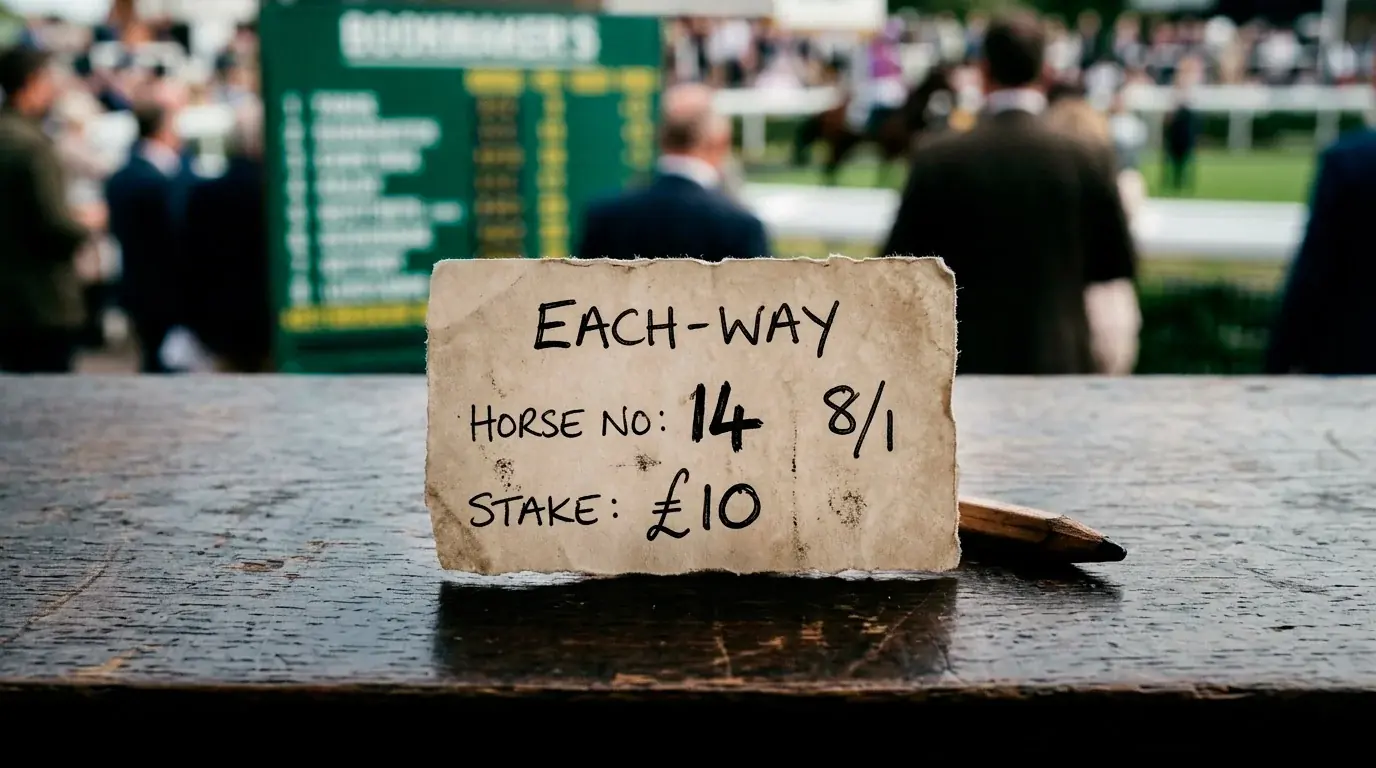
The industry standard is to count each-way stakes at their full combined value — a £5 each-way bet counts as £10 towards the wagering turnover because £10 of stake was placed. A minority of operators count only the win portion at 100 per cent and apply reduced weighting to the place portion. Check the specific promo T&Cs because this is one of the inconsistent calculations across the UK market.
Written by the editors at Free Horse Racing Betting.