Void Race Rules and Abandoned Meeting Bet Settlements
 Available in US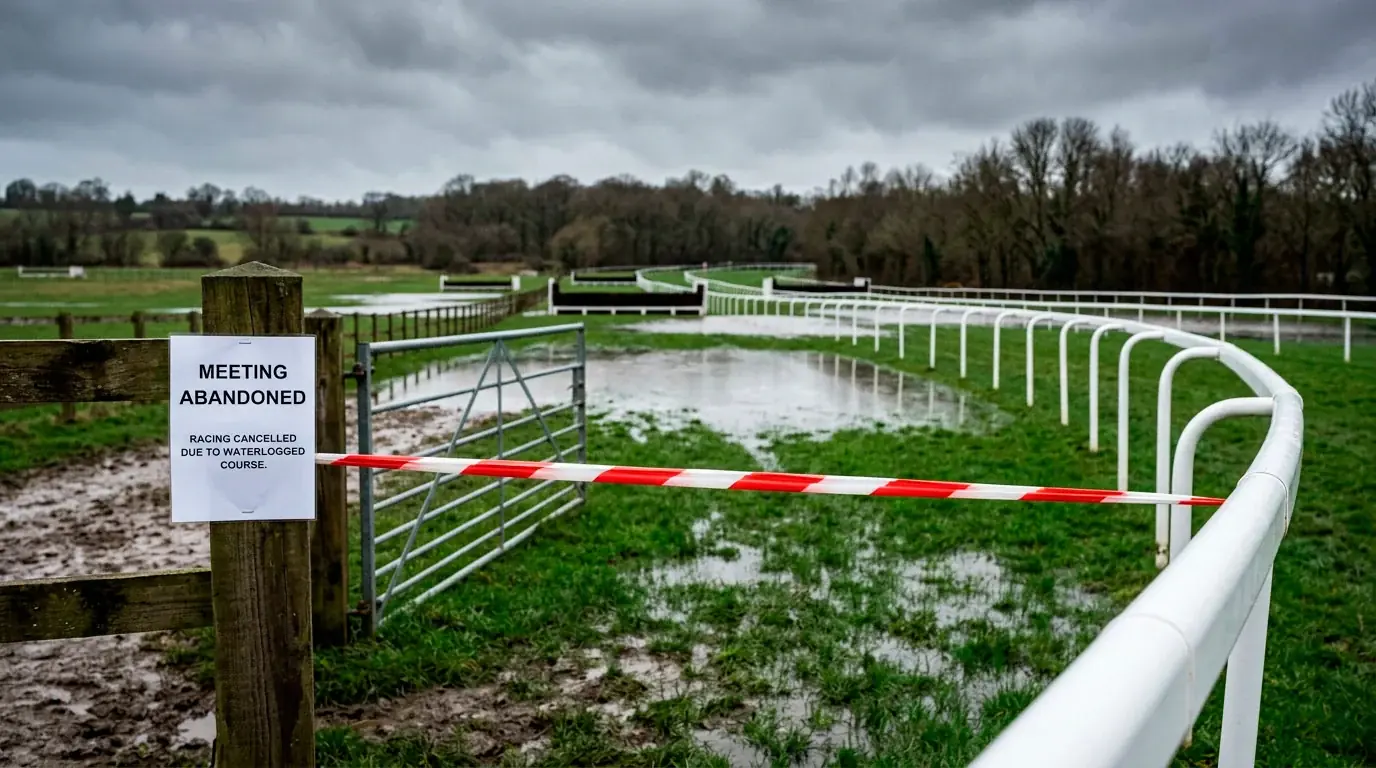
Table of Contents
- Resolving Free Bet Refunds for Void Horse Races
- Why UK racing gets abandoned — weather, and mostly weather
- The cash stake default — refund in full
- The free bet in a void race — usually re-credited, sometimes not
- Partial meeting abandonment and the multi-leg collapse
- British jumps versus flat — the weather-exposure differential
- Reader questions on abandoned fixtures and token handling
Resolving Free Bet Refunds for Void Horse Races
A Saturday in early January, three years ago, a heavy frost at Wetherby that the clerk of the course called off at 8:45am after a 7am inspection suggested some hope. I had already placed four bets for the meeting the previous evening, two of them using a reload free bet token that expired that Sunday. The race card evaporated with the announcement. My cash stakes refunded inside the hour. The free bet token — nothing for three days, then a re-credit with an expiry date that had already passed by the time it arrived. It took two support calls to get the expiry extended.
That experience is not unusual. Every UK racing punter will eventually hold a position on a race that gets voided, or a bet inside a meeting that gets abandoned, and the handling of those events is one of the most inconsistent areas of UK promotional T&Cs. Cash stakes are settled cleanly and quickly — the regulator’s rules on refund discipline are firm, and operators execute. Free bet tokens, on the other hand, sit in a T&C grey zone where each operator has worked out their own handling, and where the re-credit process can introduce frictions that cost you the token entirely.
This piece covers the weather patterns that drive abandonments, the default rules on cash stakes, the variance in free bet treatment, how multi-leg bets collapse when one leg is voided, and why British jumps racing in winter is meaningfully different from flat racing in summer on the void-risk dimension.
Why UK racing gets abandoned — weather, and mostly weather
The main causes of UK racing abandonments are waterlogging, frost, fog, and course-specific ground safety issues. Waterlogging is the most frequent — it takes a steady period of heavy rain over hours or days, and the ground inspection fails because either the running rail has subsided or sections of the course cannot support hooves safely. Frost abandonments concentrate in the December-through-February window, when overnight temperatures below freezing can leave ground that is safe at the surface but hard and dangerous six inches down. Fog abandonments are rare but decisive — the stewards cannot see the whole course from the stands, and safety rules require racing to be suspended.
Richard Wayman, the BHA’s Director of Racing, framed the surrounding economic picture bluntly in the 2025 Q1 report: “Total betting turnover has fallen by nine per cent compared with the same period in 2024. Whilst there is work to be done on the racing product to grow its appeal as a betting medium, there would be a much wider range of factors contributing to this concerning decline.” That decline sits against a backdrop of 1,460 fixtures scheduled for 2025 — a planning volume that, across a full year, guarantees a steady trickle of weather disruptions. Abandonments are not rare one-offs; they are an expected component of a full UK racing calendar.
The jumps-versus-flat weather pattern matters economically. Most winter jumps fixtures are at risk of frost and waterlogging in the December-through-February window, which is also when many bookmakers push their holiday free bet promotions. The jumps season carries higher abandonment risk than the flat season by a factor of roughly three, which means free bet tokens used in winter have a structurally higher voided-race exposure than tokens used in May through October.
The cash stake default — refund in full
The rules on cash stakes in a voided race are clean and consistent across UK operators. The stake refunds to the account balance, typically within a few hours of the race being declared void. The refund is real cash, available for immediate withdrawal subject to the operator’s standard withdrawal terms. There is no promotional footprint to a cash refund — the money exits the punter’s account the way it would exit any other losing position, except it exits as a return rather than a loss.
The timing on refunds is straightforward for standalone singles. For accumulator bets where one leg is voided and the others settle normally, the voided leg is treated as having fair odds of 1.0 — effectively dropped from the multiplication. A four-fold accumulator with one voided leg settles as a three-fold on the remaining runners. The stake is not refunded, because the bet still exists on the non-voided legs; the stake is simply redeployed onto a smaller multiple.
For full refund of an entire multi-leg bet, all legs of the bet must be voided — which does occasionally happen when a whole meeting is abandoned and the punter’s accumulator was entirely within that meeting. In that case, the full stake refunds. A meeting abandoned mid-afternoon will refund only the legs in abandoned races; legs on already-settled earlier races stay settled at their outcomes.
The free bet in a void race — usually re-credited, sometimes not
Free bet tokens placed on a voided race get treated very differently from cash stakes, and the variance across operators is substantial. The most common outcome is a re-credit of the token to the account, with the original expiry period restarted from the re-credit date. A £10 free bet that was set to expire Sunday night, placed on a Saturday afternoon race that gets voided, will typically re-credit with a fresh 7-day window from Saturday evening. That is a favourable outcome.
The less favourable outcomes. Some operators re-credit the token but retain the original expiry date, which can mean the re-credit arrives too late to use — as happened on my Wetherby frost morning. Some operators convert the token into a cash-equivalent credit at fair value, which sounds fair but which typically undervalues the token because the conversion rate assumes a standard implied conversion rate rather than the actual expected value of the token on the punter’s normal usage pattern. A small minority of operators forfeit the token entirely — the race was voided, the token was “used”, and no re-credit is offered.
The T&C language to look for on this is “free bet void policy” or “voided stake handling”. If the promo T&Cs do not explicitly commit to a re-credit, assume the operator’s default is conservative and the token may be lost on a voided race. This is one reason I am cautious about placing free bet tokens on runners in marginal-weather meetings — the tail risk of a weather abandonment costs more on a token than it does on cash.
Partial meeting abandonment and the multi-leg collapse
Partial abandonments are the ugly case. A meeting runs its first three races, then the stewards abandon the remainder because of deteriorating weather or a safety incident on the course. Multi-leg bets placed across the whole card now have a mixed settlement profile — three legs with concrete outcomes, and the remainder voided.
The logic is the same as for any voided leg in an accumulator — voided legs drop out at odds of 1.0, and the bet settles on the non-voided legs. A five-race accumulator with races 4 and 5 abandoned settles as a three-fold on races 1 to 3. This can be economically neutral, positive, or negative depending on how races 1 to 3 settled. A punter with three winning legs and two abandoned legs ends up with a reduced-size payout they might otherwise not have expected; a punter with two winning legs and one losing leg gets nothing, with the remaining abandoned legs irrelevant to the settlement.
For exotic multiples — Lucky 15s, Yankees, Patents — the same logic applies per line. Each line containing a voided leg has that leg removed, and the line is settled on the remaining selections. A Lucky 15 with one voided selection effectively becomes a smaller bet structure with the voided selection dropped from every line it appears in. The published payout can look messy in the settlement breakdown because each of the fifteen lines is settled individually.
British jumps versus flat — the weather-exposure differential
The jumps-versus-flat void-exposure differential is not symmetric across the calendar. The core jumps season runs November through April and includes the Cheltenham Festival, the Grand National meeting, the King George VI Chase at Kempton on Boxing Day, and a dense run of midweek fixtures at courses like Uttoxeter, Haydock, Newbury, Chepstow, and Warwick. The flat turf season runs roughly April through October, with all-weather flat racing filling the gap through winter at Kempton, Lingfield, Wolverhampton, Newcastle, Southwell, and Chelmsford.
The weather risk concentrates on the jumps turf and on the turf flat shoulders — spring and autumn. All-weather tracks are nearly weather-immune; they rarely abandon for ground reasons, and fog is the main non-operational cause. A free bet token used on an all-weather meeting carries essentially zero void risk. The same token used on a winter jumps meeting carries a rough 8 to 12 per cent chance of some form of weather disruption, depending on the specific course and the prevailing conditions.
The practical workflow. If the free bet token has a tight expiry and I cannot afford to have it sit in limbo for three days while an abandoned-race re-credit works through, I use it on an all-weather meeting even if the race I would naturally have backed is on a jumps card. The expected-value cost of switching markets is usually smaller than the expected-value cost of losing the token to a weather-abandonment re-credit that arrives too late. For the settlement architecture these rules sit inside, see my piece on each-way bet settlement rules.
Reader questions on abandoned fixtures and token handling
If only one leg of my accumulator is void, does the whole multiple collapse?
No. A voided leg is treated as odds of 1.0 and dropped from the multiplication. A five-fold with one voided leg settles as a four-fold on the remaining selections. The stake stays with the bet — it is not refunded proportionally — so the bet continues to run at reduced size. Only a bet with every leg voided results in a full stake refund.
How long do I have to wait for a re-credited free bet after abandonment?
Most UK operators re-credit within 24 to 72 hours of a meeting being declared abandoned. A minority re-credit inside the same day, particularly on morning abandonments where the operator’s promotional engine picks up the voided stakes before the afternoon window closes. A small number of operators run longer re-credit cycles of up to seven days, which can create expiry problems if the original token had a tight window.
Written by the editors at Free Horse Racing Betting.