Dead Heat Rules and Horse Racing Bet Settlements
 Available in US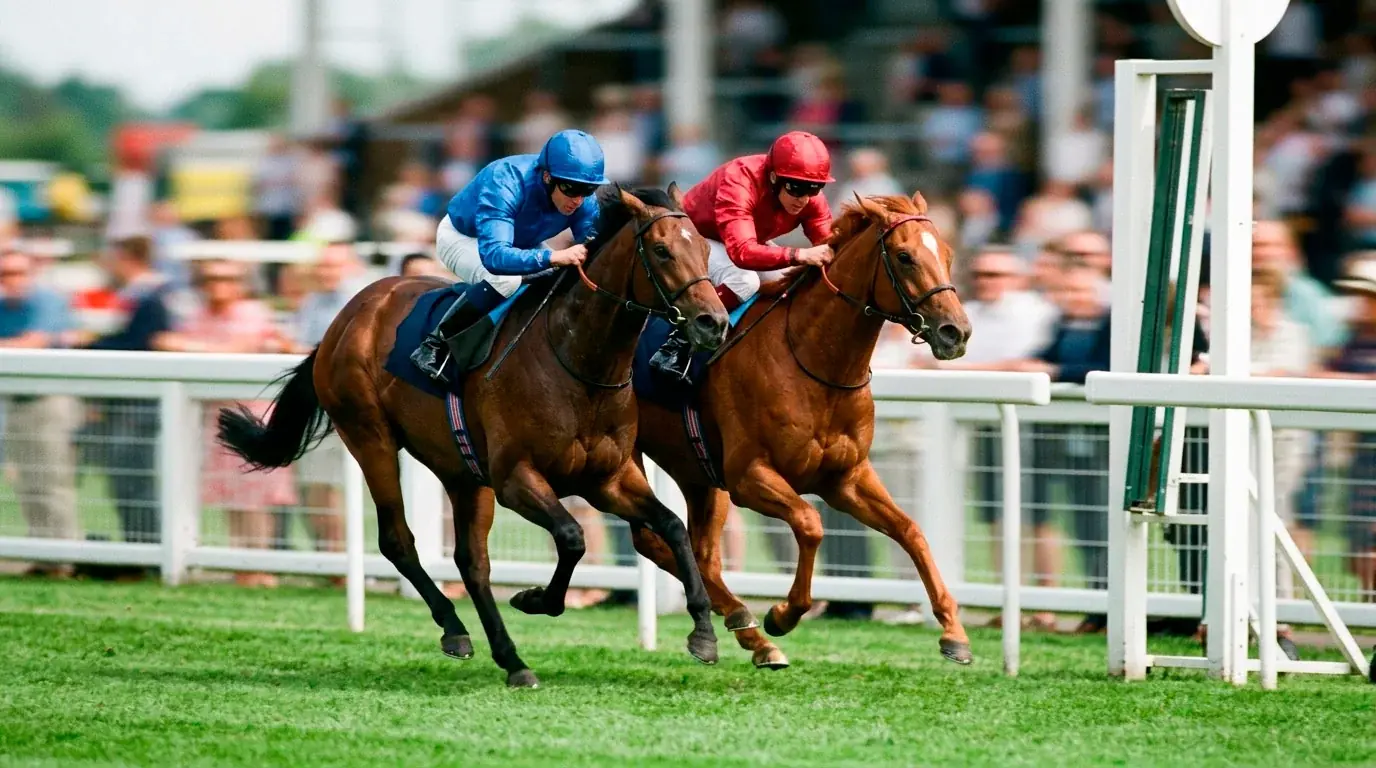
Table of Contents
Calculating Split Returns Under UK Dead Heat Rules
I once backed a 10.0 outsider in a seven-runner flat handicap at Goodwood that went to a photo finish against the 5.0 second favourite. The judge called it a dead heat. My stake was £10, the price was 10.0, and the payout was £55 — which is a perfectly reasonable return on an outside shot but which felt, at the moment I read the settlement notification, like being robbed of half a win. The payout is not £100. It is half the stake settled at full price, which is £55 gross (my £5 stake at 10.0 plus the £5 returned as refund on the halved stake). Mathematically defensible. Emotionally — not great.
Dead heats are one of those UK racing rules that almost every punter has a vague impression about and that almost nobody can articulate accurately when the settlement notification lands. The mechanics are straightforward once you see them cleanly — the stake is divided by the number of horses involved in the dead heat, and only the divided portion is settled at the quoted odds. But the arithmetic hits you harder than you expect, particularly on each-way bets and on free bets where the SNR structure interacts with the stake division in counterintuitive ways.
This piece covers the two-way and three-way split logic, the each-way interaction that doubles the complication, how accumulators settle around a dead heat, and a worked example on a £10 free bet landing on a dead-heated winner.
The two-way split and the logic underneath
A two-horse dead heat is the common case — two runners judged inseparable on the line after the photo finish. The bookmaker treats the stake as if half of it had been on a winning horse and half on a losing horse. Your stake is halved. The halved portion is settled at the full quoted odds. The other half is lost.
Worked through on my Goodwood case. £10 at 10.0 on a two-way dead heat. £5 settles at 10.0, returning £50 including stake. £5 is treated as a losing stake and lost. Net payout £50. Net profit versus stake — £40 on £10, which is an effective price of 5.0. That is the dead-heat adjustment in one line: a two-way dead heat halves your effective price.
The logic sits in the fairness principle. A dead heat is an ambiguity the bookmaker cannot resolve — the judge has declared two horses as joint winners, so neither can be treated as the sole winner. The stake-division rule is the cleanest mathematical formulation of the ambiguity. The alternative — paying out both winners at full odds — would convert the dead heat into a licence to print money for anyone who happened to be on either horse, which is not sustainable promotional economics. The alternative in the other direction — treating both as losers — would be manifestly unfair. The stake-division split is the settled UK industry standard and has been since the early twentieth century.
The three-way split — rare, but it happens
A three-way dead heat is genuinely uncommon. I can count the number I have seen in seven years on one hand. But it is possible, and when it happens the stake is divided by three. A £30 stake at 10.0 on a horse that dead-heats three ways returns £100 gross — £10 settles at 10.0 for a £100 payout, and £20 is lost.
The effective price falls to one-third of the quoted odds — a 10.0 runner in a three-way dead heat pays out as if it were 3.33. For longer-priced runners this can still be a profitable outcome; for shorter-priced runners, particularly anything below 4.0, a three-way dead heat can convert a winning stake into a net loss.
Three-way dead heats are commonly seen in place markets rather than win markets. On a seven-runner each-way bet with second place decided by a three-horse photo finish, the second-place portion of the each-way bet dead-heats three ways on the place settlement. That is the more common settlement problem in UK racing — not a three-way dead heat for the win, but a three-way dead heat for the place.
Dead heats inside each-way bets
The each-way bet architecture is where dead heats cause the most confusion. An each-way bet has two components — the win portion and the place portion — settled independently at half the original stake each. A £10 each-way bet is £5 on the win and £5 on the place. A dead heat on either component settles under the standard stake-division logic, but the two components are settled separately.
Worked example. £10 each-way at 10.0 with place terms of 1/4 odds for 3 places. The runner dead-heats for second place against one other horse — a two-way dead heat on the place portion. The win portion settles as a loss (not having won). The place portion is divided by two — £2.50 settles at 1/4 of 10.0 (which is 3.25), returning £8.125 gross. £2.50 is lost. Net from the each-way — payout of £8.125 against a total stake of £10. A losing bet by £1.875, despite the runner having finished in a paid place.
This counterintuitive outcome — a placed runner producing a losing each-way bet — is one of the reliably-shocking settlement results in UK racing. The combination of place terms of 1/4 odds, two-way dead-heat stake division, and the win-side loss working against the bet together produce net outcomes that feel unfair but which are mathematically correct under the standard settlement rules.
Dead heats inside accumulators
Accumulator legs that dead-heat settle at the dead-heat-adjusted odds, not at the original quoted price. This is the clean case logically but one that surprises punters in practice. A four-fold accumulator with one leg dead-heating two ways has that leg’s odds effectively halved before the multiplication.
Worked example. A four-fold at 3.0 × 3.0 × 3.0 × 3.0 = 81. All four runners win. Gross return on £10 stake is £810. Now — one of the four runners wins by dead-heat two-way. That leg’s odds become 2.0 for settlement purposes (the halving of effective price we saw on the single). The accumulator settles as 3.0 × 3.0 × 3.0 × 2.0 = 54. Gross return becomes £540. The dead heat on one leg has reduced the accumulator payout by £270 — significantly more than the pro-rata halving of a single stake, because the accumulator compounds the adjustment through the multiplication.
The dead-heat exposure grows with accumulator length. A ten-leg accumulator where one leg dead-heats has the winning payout multiplied by 0.5 on that single leg, but the compounding effect on the total multiplication is still a 50 per cent reduction on that leg’s contribution. The average size of a UK handicap field — 11.02 flat, 9.41 jumps — means dead-heat exposure is non-trivial on any accumulator spanning multiple races.
A worked £10 SNR free bet on a dead-heat winner
The most interesting case, and the one free-bet users should be able to walk through in their head, is a stake-not-returned free bet on a dead-heat winner. The SNR structure removes the stake portion of the return — only profit is paid — which intersects with the dead-heat stake-division logic in an asymmetric way.
Worked through. £10 SNR free bet at 10.0 on a runner that wins by two-way dead heat. Under cash settlement, the stake would be halved — £5 settles at 10.0 (paying £50), £5 is lost, net cash payout £50. Under SNR settlement, the stake is already gone and not in play. The £5 profit portion of the settling £5 stake is £45 (being 5 × 10 minus 5). Because only the profit settles on an SNR, the dead-heat adjustment applies to the settled portion — £5 of the £10 SNR free bet “settled” at 10.0 and delivers profit of £45, and the other £5 portion delivered nothing. Net free bet payout on the dead heat is £45.
Compare to the same SNR free bet on a clean win — payout is £90 (£10 × 10 minus £10 stake). The dead heat halves the free bet’s effective profit as it halves a cash stake’s effective price. Same logic, same outcome — your free bet is worth half what it would have been on a clean winning result. The trap punters fall into is assuming SNR somehow bypasses the dead-heat rule, which it does not — the rule applies to whatever stake was placed, cash or free, and SNR simply strips the stake-return component while the dead-heat adjustment works normally on the profit side. How dead heats sit alongside the other edge-case settlement rules — BOG, Rule 4, NRNB — is covered together in my piece on each-way bet settlement rules.
Reader questions on tied-finish settlement
Can a photo finish be ruled a dead heat, and who decides?
Yes. The judge reviews the photo-finish image after the race and, if no horse can be separated by the width of a nostril or better on the recorded image, declares a dead heat. The decision is final and cannot be appealed at the bookmaker level. Modern UK racing uses high-frame-rate finish cameras that resolve margins down to a single millimetre, so true dead heats are rarer than they were in the pre-digital era — but they still happen several times per year across the national calendar.
Does Best Odds Guaranteed still apply to a dead heat winner?
Yes, BOG applies to the settled portion of the dead-heat stake. If the board price you took was 8.0 and the SP on the dead-heat runner is 10.0, BOG pays at 10.0 on the half-stake that settles as winning. The dead-heat stake-division runs first — halving the stake — and then BOG applies its price uplift to the settled portion. The effective payout on BOG plus dead heat is better than BOG alone on a losing runner but worse than BOG alone on a clean winner.
Prepared by the Free Horse Racing Betting editorial staff.