GamStop Rules for UK Horse Racing Betting Sites
 Available in US
Table of Contents
- Applying GamStop Self-Exclusion to UK Racing Accounts
- What GamStop is — the single register since 2018
- Coverage scope — every UKGC licensed operator, full stop
- Duration options — 6 months, 1 year, 5 years
- Non-GamStop sites — the warning label this section exists for
- Free bet credits during exclusion
- Support resources beyond the register
- Reader questions on cross-operator self-exclusion
Applying GamStop Self-Exclusion to UK Racing Accounts
GamStop is the single cross-operator self-exclusion register for UK licensed betting. A customer registers once, selects a duration, and is blocked from accessing every single UKGC licensed operator for the duration of the exclusion. That is what it does. The public framing of GamStop often attributes to it far more than this — customers assume it blocks every betting website accessible from the UK, or that it prevents marketing from any source that might mention gambling, or that it somehow protects against the offshore operators advertising on search engines and social media. It does none of those things. Understanding precisely what GamStop does and does not cover is the starting point for a serious conversation about self-exclusion, because the tool is effective within its scope and dangerously misread outside it.
The scale of the unregulated market that sits outside the GamStop perimeter is the reason the distinction matters. Frontier Economics and the Betting and Gaming Council have documented 1.5 million UK residents staking up to £4.3 billion annually through unregulated channels. IFHA data identified 22 unlicensed sites accepting bets on UK horse racing where UK-based traffic grew by 522 per cent between August 2021 and September 2024. None of these operators are in the GamStop register. A self-excluded customer can navigate to any of them and open an account unimpeded.
This piece covers what GamStop actually is and when it was launched, its coverage scope, the duration options available, the specific risk of “non-GamStop” operators, free bet implications during exclusion, and support resources beyond the register itself.
What GamStop is — the single register since 2018
GamStop launched in April 2018 as the UK’s cross-operator self-exclusion register. Before GamStop, a customer wanting to self-exclude had to register individually at every operator they held an account with — a process that was administratively tedious and left gaps for operators the customer had forgotten about or had yet to engage with. GamStop consolidates the exclusion into a single registration that propagates across the entire UKGC licensed market.
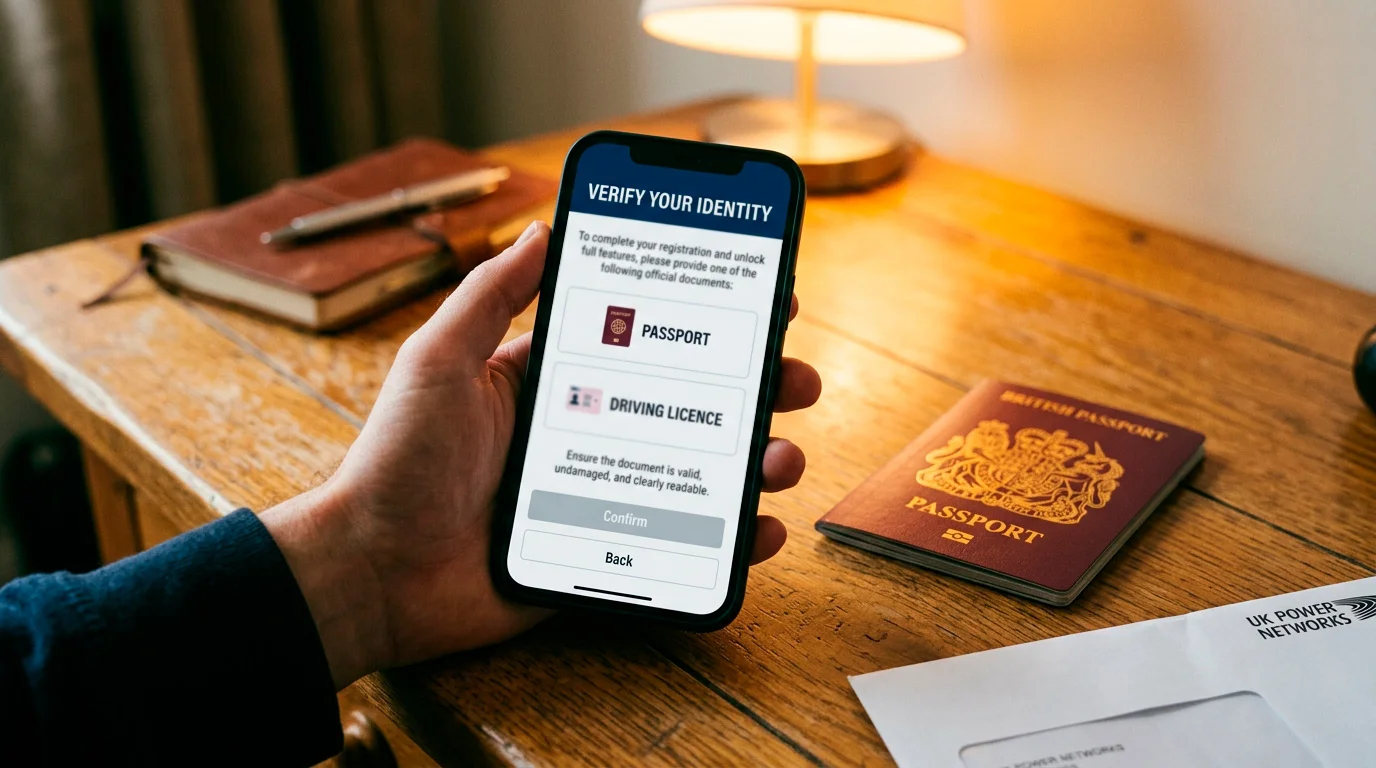
The register is operated by the National Online Self-Exclusion Scheme Ltd, a not-for-profit body funded by the gambling industry through a compulsory levy. It is independent of any individual operator. Registration is free to the customer, requires identity verification equivalent to a standard KYC process, and is completed online without operator intermediation.
The technical mechanism is straightforward. Every UKGC licensed operator is required as a condition of their licence to integrate with the GamStop register. When a customer attempts to open or use an account at a licensed operator, the operator’s KYC system cross-references the customer’s identity against the GamStop register. A match blocks the account — new accounts cannot be opened, existing accounts cannot be reactivated. The integration is mandatory and has been consistently enforced since 2020 when the UKGC made participation a formal licence requirement.
Coverage scope — every UKGC licensed operator, full stop
The scope of GamStop’s protection is defined by the UKGC licensing boundary. Every operator holding a UK Gambling Commission remote operating licence is covered. As of 31 March 2025, the Gambling Commission reported 3,086 active gambling licences across the UK regulated market — a 2.3 per cent decline on the previous year — and every one of those licences carries GamStop integration obligations.
The scope includes all the major online betting brands UK customers recognise: the high-street bookmakers’ online platforms, the exchange operators, the casino-adjacent betting operators, and the niche racing-focused operators. It also includes the lottery-adjacent gambling brands, the bingo operators, and the pool-betting operators including the Tote. Every product category under the UKGC licensing umbrella is covered.
The scope explicitly excludes offshore operators without UK licences. Sites operating from jurisdictions like Curacao, the Isle of Man (where licensed there but not UKGC-licensed for remote UK operations), Malta, Gibraltar, and other gaming hubs may accept UK-based customers without being GamStop-integrated. These are the operators that the promotional content for “non-GamStop bookmakers” refers to — and their exclusion from the register is a commercial feature for them, deliberately marketed to self-excluded UK customers seeking a workaround.
Duration options — 6 months, 1 year, 5 years
The three duration options at GamStop registration are 6 months, 1 year, and 5 years. Each is an irreversible commitment for the selected period — there is no early-termination mechanism during the exclusion. A customer who registers for 5 years cannot back out in month 8 or month 14 or month 48. The commitment is binding until the clock runs out.
The 6-month option is the minimum available under GamStop. Shorter-duration self-exclusion at an individual operator level is possible through the operator’s own tools, but the cross-operator register does not offer anything shorter than 6 months. The minimum duration is deliberate — the intervention is designed to impose meaningful structural distance from betting activity, and periods shorter than 6 months are regarded as behavioural time-outs rather than serious exclusions.
At the end of the selected period, the exclusion does not automatically lift. The customer must positively re-engage — contact GamStop, confirm intent to come off the register, complete any identity re-verification. Only after positive re-engagement does the register release the identity block, and customers can then reopen accounts at UKGC operators. This positive-reactivation requirement creates a reflection point at the end of the period that reduces automatic-return behaviour.
Non-GamStop sites — the warning label this section exists for
The phrase “non-GamStop bookmakers” is marketed aggressively to UK self-excluded customers by offshore operators. The pitch is that the operator does not participate in GamStop and therefore accepts customers whose identities are on the register. This is technically true — offshore operators without UKGC licences are not required to integrate with GamStop — but it is the headline of a much more dangerous proposition.
Offshore operators accepting UK customers are operating in a regulatory grey zone. From the UKGC’s perspective, accepting UK residents as betting customers without a UK remote licence is a breach of UK law. The operators typically argue they are legally operating in their home jurisdiction and that UK customers are transacting at their own risk. In practice what this means for UK customers is that standard consumer protections — player funds protection, dispute resolution through IBAS, UKGC-supervised complaint handling, AML and KYC discipline — do not apply. Customers who lose balances to operator insolvency or arbitrary account closures have no structural redress.
The black-market data quantifies the scale. IFHA tracking showed 522 per cent growth in UK traffic to 22 specific unlicensed horse racing bookmakers across August 2021 to September 2024. BGC estimates put £9.4 million of Grand National 2025 stake flow through unregulated channels — about 3.8 per cent of the £250 million total bet on that single race. Yield Sec estimated unregulated UK operators took £379 million in H1 2025, covering about 9 per cent of total UK betting. The offshore market is substantial, growing, and specifically targeting customers that the UKGC framework is designed to protect.
A self-excluded customer who navigates to a non-GamStop site is doing exactly what the exclusion was designed to prevent — continuing to bet despite the self-identified need to stop. The offshore operator has no counter-incentive to enforce the customer’s original exclusion intent; their commercial model is predicated on accepting the customers other operators have declined.
Free bet credits during exclusion
Free bet credits in accounts at UKGC operators are blocked during a GamStop exclusion. The customer cannot deploy tokens, cannot claim newly-issued credits, cannot receive promotional emails prompting deployment. The account is entirely frozen for the exclusion duration.
Pre-existing token expiries continue to run during the exclusion. A free bet with a 7-day expiry credited a week before the customer registered with GamStop will have expired by the time the exclusion ends. Operators do not typically preserve tokens across multi-year exclusions. The promotional value in the account at exclusion start is usually forfeited by the time the account reopens.
Customers who come off GamStop at the end of their selected period are treated as returning customers at the operator level, not as new customers eligible for welcome offers. The welcome offer eligibility is typically tied to first-time account status, and an account that existed before the GamStop exclusion and reactivates afterwards does not qualify as first-time. Returning customers can claim ongoing-customer promotions — reloads, loyalty-club activity — but the headline welcome offer is not available.
Support resources beyond the register
GamStop is a structural tool, not a counselling service. Customers who feel they need support beyond the exclusion mechanism itself have several external resources available. GambleAware is the largest UK-wide charity providing information and referral services for people affected by gambling harm. GamCare operates a 24-hour helpline and provides one-to-one treatment services. The National Gambling Support Network coordinates treatment across regional providers.
These resources are independent of the operators and independent of GamStop itself. Contacting them does not create any record at the UKGC or at individual operators. The services are free to the customer at the point of access, funded by the industry levy that also funds GamStop.
For customers who are weighing up whether to register with GamStop but who have not yet done so, the support resources are useful even in advance of registration. A conversation with GamCare or one of the other bodies can clarify whether self-exclusion is the right intervention, what duration is appropriate, and what other steps might sit alongside it. The decision to register is one-way while the register itself is active — the support conversation can help make the decision cleanly rather than impulsively. Which UK operators have the cleanest SafeGambling integrations and the most accessible escalation routes is a factor I weigh in my piece on the best UK horse racing bookmakers.
Reader questions on cross-operator self-exclusion
If I’m on GamStop, can I still enter free-to-play racing games?
This depends on the specific game and its host platform. Free-to-play prediction games hosted on UKGC licensed operator platforms are typically blocked during a GamStop exclusion because the host operator enforces the register against all account activity. Free-to-play games hosted by media companies — newspaper-branded competitions, TV-network games — that do not require a UKGC licensed operator account may not be blocked. The test is whether participation requires engagement with a GamStop-integrated platform.
Are ‘non-GamStop’ bookmakers legal for UK residents?
Offshore operators accepting UK customers without a UKGC remote licence are operating in a regulatory grey zone that most UK authorities treat as a breach of UK licensing requirements. The operators may be legally operating in their home jurisdictions but are not legally authorised to provide remote gambling services to UK residents. UK customers who use these operators lose standard consumer protections — player funds protection, dispute resolution, AML discipline — and have no recourse through UK regulatory channels if things go wrong.
Published by the Free Horse Racing Betting team.