Grand National First-Timer Bets and Ballot Offers
 Available in US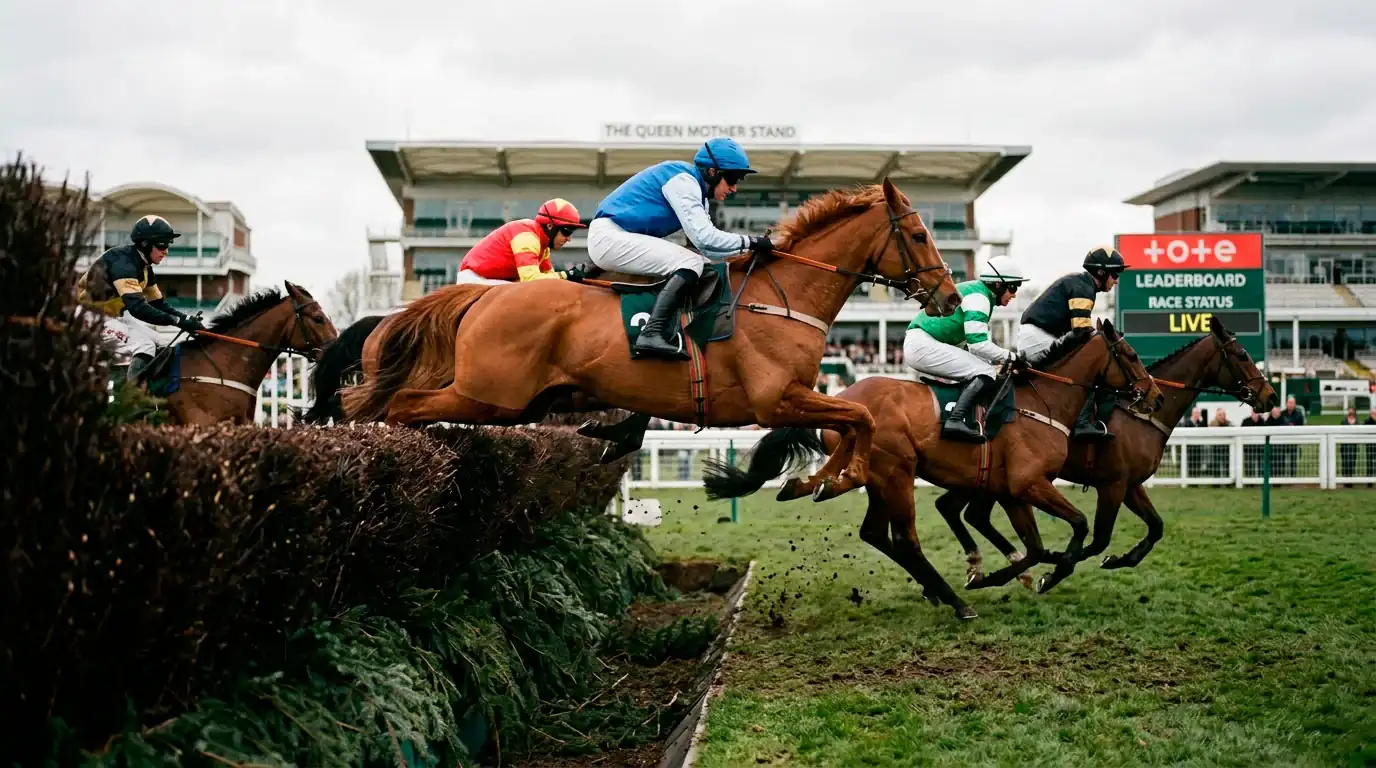
Table of Contents
- Claiming First-Timer Free Bets for the Grand National
- The ballot and the post-2024 field shape
- Famous fences and how betting behaviour adjusts
- First-timer free bet strategy — why the welcome offer is the logical entry
- Sweepstake versus free bet — two different products
- Deposit minimums for Grand National welcome offers
- Reader questions on Aintree ballot and field mechanics
Claiming First-Timer Free Bets for the Grand National
Around 12 million British adults place a bet on the Grand National in a typical year, according to UCFB’s analysis of the race’s broader financial footprint. That is a staggering figure — it represents roughly one in four UK adults staking cash on a single race they may not have given any other thought to all year. Roughly 30 per cent of those bettors are first-timers or returning after long breaks, and 82 per cent of the total stake pool comes in at £5 or smaller. The Grand National is, by an enormous margin, the most democratised betting event in the UK calendar, and the operator-side promotional strategy reflects that demographic fact in ways that do not apply to any other fixture.
This matters for how welcome offers and first-timer promotions are structured specifically for Aintree. The standard welcome offer — “Bet £10, Get £30” in stake-not-returned free bets — gets aggressive competitive positioning in the week before the National, with a handful of operators running enhanced variants that approach “Bet £5, Get £40” territory specifically to capture the first-time punter. The economics is straightforward: a first-timer acquired on Grand National weekend is an account-lifetime-value prospect worth far more than the promotional cost of the welcome offer.
This piece covers the ballot structure, the famous fences and their betting implications, why the welcome offer is the logical entry point for a first-timer, how office sweepstakes differ from free bets, and the deposit minimums that gate entry into each operator.
The ballot and the post-2024 field shape
The Grand National field is a 34-runner maximum following the 2024 reforms that reduced the field from 40 to 34 runners as part of the Aintree safety programme. The ballot mechanism determines which runners actually make the line-up when more horses are entered than the field can accommodate. Eligibility requires specific rating thresholds, qualifying race entries, and connections’ declared intentions; the final order of entry is determined by handicap rating, with the top-rated eligible runners guaranteed places.
The ballot has knock-on effects for betting behaviour. Runners near the ballot cut-off line — typically rated in the 140s on the BHA handicap scale — may not know until the week of the race whether they will run. Ante-post betting on these runners carries genuine withdrawal risk, and Non-Runner No Bet is the standard insurance against a withdrawn stake losing. A free bet taken on a ballot-line runner without NRNB coverage is operating on thin ice; withdrawn runners settle as losing bets in the absence of NRNB protection.
The field-size reduction from 40 to 34 has also tightened standard each-way place terms for the race. Standard 4-place terms at 1/4 odds remain in effect — the 16+ runner threshold is still comfortably exceeded — but the probability of placing has changed marginally. On a random-runner basis, the 4-in-40 implied place rate becomes 4-in-34, a modest but real uplift. Extra Places promotions offering 5 or 6 places at 1/4 odds interact with the reduced field to produce place-probability uplifts that were structurally smaller before the 2024 reforms.
Famous fences and how betting behaviour adjusts
The Grand National is the only UK jumps race where the fences themselves have names. Becher’s Brook at the sixth fence (and again at the twenty-second). The Canal Turn at the eighth. Foinavon at the seventh, named after the 1967 100-to-1 winner who navigated the pile-up that stopped most of the field. The Chair at the fifteenth, the biggest single fence on any UK racecourse. These are not decorative trivia; they are structural features of the race that affect completion rates and therefore betting outcomes.
The betting implication runs through the completion probability. In a typical recent Grand National, roughly 40 to 55 per cent of the field completes the course, with the rest pulled up, unseating riders, or falling at identifiable problem fences. Becher’s Brook, Foinavon and the Canal Turn account for a disproportionate share of the departures. A punter with a view on a specific runner is not just handicapping speed and stamina — they are implicitly handicapping whether the runner will even be on its feet at the final fence.
This is why Extra Places promotions on the Grand National are economically generous even when the promotional extension looks modest. Standard 4 places at 1/4 odds, in a field where only 40 to 55 per cent complete, is effectively paying each-way on the 4 of perhaps 15 or 20 horses that actually finish — a much higher implied place probability than the raw 4-of-34 calculation suggests. An Extra Places extension to 6 places at 1/4 odds captures a meaningful additional slice of the finishing field.
First-timer free bet strategy — why the welcome offer is the logical entry
For the first-timer audience — roughly 30 per cent of Grand National bettors — the welcome free bet is the structurally cleanest entry point into the promotional market. The alternative is either an unpromoted cash bet or a third-party tote sweepstake. The welcome offer sits in between, offering a stake-matched promotional overlay on the first bet that no other route provides.
The standard mechanic. Open an account at a UK licensed operator, deposit £10 (the typical minimum for welcome-eligible deposits), place a £10 qualifying bet at odds of 1.5 or higher, receive £30 in stake-not-returned free bets. For a first-timer deploying all £30 of the free bet credit on the Grand National — typically as a single each-way bet on a mid-priced runner — the effective cost-adjusted exposure is just the initial £10 qualifying stake. The welcome-offer overlay effectively pays for the Grand National bet itself.
The deposit-method question matters here, as it does for all welcome offers. Skrill, Neteller, and PayPal are almost universally excluded from welcome-offer eligibility across UK operators, so first-timers using those rails find their welcome credit fails to trigger. UK-issued debit cards are the clean rail that works at every operator and should be the default for any first-timer planning to claim a welcome offer.
Sweepstake versus free bet — two different products
Office sweepstakes are the traditional Grand National entry route for people who do not otherwise bet. Each participant pays a flat entry fee — typically £1 or £2 — and draws a horse from a hat or a randomised allocation list. The winner of the race’s connections collect the combined sweepstake pot minus any expenses, and the second- and third-place participants often get smaller shares depending on the sweepstake rules.
Sweepstakes are not free bets and do not unlock free bets. The sweepstake operates entirely outside the UK licensed betting framework. No free bet is generated by participating. No account is opened. No promotional credit flows from the sweepstake to any operator. A first-timer who participates in an office sweepstake has gained the entertainment value of the sweepstake itself, but has not engaged with the operator promotional market at all.
The cross-over for first-timers who want both — sweepstake participation and a free bet — is to do both in parallel. Participate in the office sweepstake with £2 or whatever the entry fee is. Separately, open an account with a UK operator and claim the welcome offer on the Grand National. The two activities are entirely independent and the welcome-offer promotional credit has no relationship to the sweepstake outcome. I have known casual punters treat the two as if they were mutually exclusive, and they are not.
Deposit minimums for Grand National welcome offers
The deposit-minimum structure across UK operators for Grand National welcome offers runs in three bands. £5 minimum deposits are offered by a minority of operators, usually on their lowest-tier welcome offers — “Bet £5, Get £15” structures that are cheaper to trigger but carry smaller promotional credit. £10 minimum deposits are the industry standard, aligned to the “Bet £10, Get £30” welcome offer that dominates the UK market. £20 minimum deposits appear on the more aggressive promotional tiers — “Bet £20, Get £60” structures that require larger qualifying stakes but return larger free bet credits.
For a first-time Grand National bettor with no intention of becoming a regular punter, the £5 or £10 tier is the rational target. The £20 tier asks the first-timer to stake more cash at risk for a marginal promotional uplift that they are unlikely to deploy efficiently on their first-ever race. A £30 free bet credit is significantly more than most first-timers can practically use on a single race anyway; a £60 free bet credit is overwhelmed by the first-timer’s ability to deploy it.
The practical workflow for a first-time Grand National bettor. Check the welcome offers at three or four major UK licensed operators the week before the National. Compare the minimum deposit, the qualifying bet size, the free bet credit, and the expiry period on the promotional credit. Select the operator whose offer matches the intended stake size most closely — if the plan is to bet £10 on the National, the £10-qualifier-£30-credit offer is optimal. The festival-specific promo calendar around Aintree, and the interaction between Grand National offers and other major-meeting promotions through the season, is laid out more fully in my piece on Grand National and festival free bets.
Reader questions on Aintree ballot and field mechanics
What is the maximum field size at the modern Grand National?
34 runners, following the 2024 safety reforms that reduced the field from the historic 40-runner maximum. The ballot structure determines which of the eligible entered runners actually make the line-up when more horses are declared than the field accommodates. The top-rated eligible runners on the BHA handicap scale are guaranteed places, with the ballot deciding the remaining starters from the next tranche of qualified entries.
Are there free bet offers specifically aimed at first-time Grand National bettors?
The standard welcome offer is the primary route for first-timers — ‘Bet £10, Get £30’ in SNR free bets is the near-universal template. A handful of operators run enhanced promotional variants in the week before the National that are targeted at acquisition, with slightly more generous credit-to-qualifier ratios than the year-round welcome offer. No operator runs a formally ‘first-timer only’ offer, but the welcome offer itself is only claimable by first-time account holders, which functionally targets the same audience.
Created by the ”Free Horse Racing Betting” editorial team.