Lucky 15, 31 and 63 Horse Racing Multiples
 Available in US
Table of Contents
- Structuring Payouts for Lucky 15 and 31 Multiples
- The Lucky 15 structure — four selections, fifteen lines
- The one-winner bonus — 2x, 3x, 4x odds enhancement
- All-winners bonus — 10 to 25 per cent
- Free bet tokens on Lucky 15 multiples
- Lucky 31 and Lucky 63 — scaling up the structure
- Reader questions on full-cover multiples
Structuring Payouts for Lucky 15 and 31 Multiples
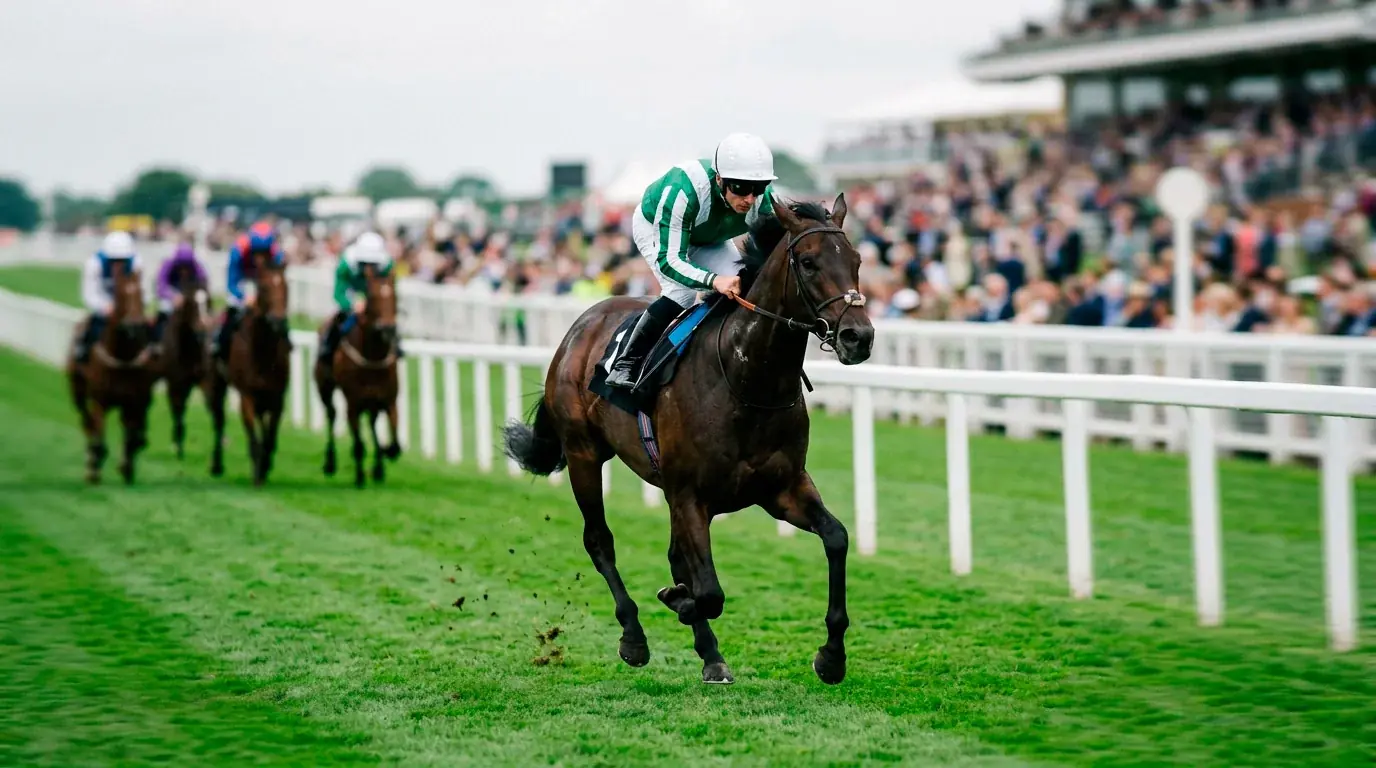
A punter hands me their Lucky 15 ticket after Saturday’s ITV races, one winner out of four, and asks why the return is £32 rather than the £20 they expected. Welcome to the world of full-cover multiples — the UK racing bet category where punters are routinely surprised in both directions, because the underlying structure is more complicated than anything else in the mainstream betting menu and most operators do not explain the one-winner bonus consistently. The Lucky family is specifically British, specifically tied to horse racing, and specifically designed to give occasional punters a reason to engage with multi-race cards they would otherwise ignore.
Behind the marketing simplicity sits real structural complexity. A Lucky 15 is not “four selections multiplied together”. It is 15 separate bets — four singles, six doubles, four trebles, and one fourfold accumulator — settled independently and combined into a single payout. A Lucky 31 adds a fifth selection and takes the line count to 31 combinations. A Lucky 63 uses six selections and generates 63 lines. The line counts follow a mathematical pattern — 2 to the power of n, minus 1, for n selections — which is why the numbers are what they are. The fixed-odds overround across UK racing sits at 110 to 130 per cent on typical markets, and Lucky multiples compound that overround through their underlying structure in ways that make the bet-category appear more generous than it actually is.
This piece walks through the Lucky 15 structure line by line, the one-winner bonus that doubles the effective odds on a single success, the all-winners bonus that operators run as a secondary promotion, the interaction with free bet tokens, and the arithmetic of Lucky 31 and Lucky 63 for punters considering stepping up.
The Lucky 15 structure — four selections, fifteen lines
A Lucky 15 takes four selections — usually four horses across four separate races — and bets them in every possible combination. The lines break down as four singles (one bet per selection), six doubles (every unique pair of selections), four trebles (every unique combination of three selections), and one fourfold (all four selections combining). The sum is 15 separate bets, each with their own settlement outcome.
The stake scaling is per line. A “50p Lucky 15” means 50p on each of the 15 lines, for a total outlay of £7.50. A “£1 Lucky 15” means £1 on each of the 15 lines, for a total outlay of £15. The per-line stake is the unit the operator uses to calculate each line’s settlement, and the combined payout is the sum across all winning lines. Most punters underestimate the total outlay because they see the per-line stake rather than the aggregate.
The settlement logic is strict line-by-line. Each single line settles against its individual selection’s outcome. Each double line settles against the two constituent selections both winning. Each treble line settles against all three constituent selections winning. The fourfold settles only if all four selections win. Any combination with a losing selection in it is a losing line. With four selections, the maximum possible winning-line count is 15 (all four win), the minimum non-zero count is 1 (only one selection wins, and that single line is the only payout).
The one-winner bonus — 2x, 3x, 4x odds enhancement
The one-winner bonus is the promotional structure that makes Lucky 15 economically attractive when only one of four selections wins. Without the bonus, a single-winner outcome would pay only the one winning single line — with three losing singles and all multi-line combinations dead — which would typically produce a net loss on the bet. The one-winner bonus enhances the payout on that single winning line by a fixed multiple, converting a losing-bet-with-one-winner into a break-even or modestly profitable outcome.
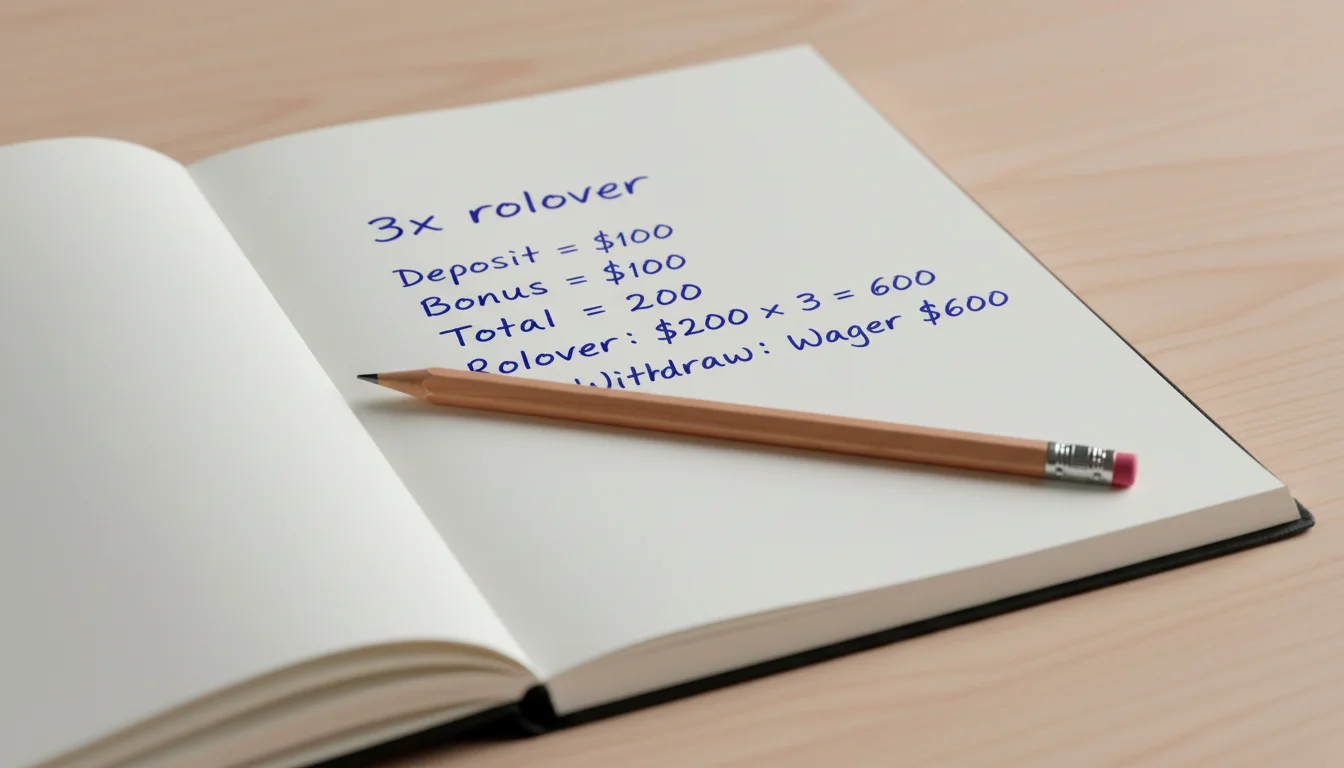
The multiple varies by operator. A 2x enhancement doubles the effective odds on the one winner, so a £1 Lucky 15 with one winner at 10.0 pays 2 × 10.0 × £1 = £20 on the enhanced line (net of £14 unwon stake on the other lines). A 3x enhancement triples the effective odds — £30 on the same scenario. A 4x enhancement is the most generous operator-side promotion and is relatively uncommon — £40 on the same scenario, a strong payout that comfortably exceeds the total £15 outlay.
The one-winner bonus only triggers on a single winning selection among the four. Two or more winners defeats the bonus — the bet settles at standard odds across all winning lines, which is already a more substantial payout than any one-winner bonus could provide. The bonus is designed to prevent the common “one winner, nothing to show for it” disappointment that would otherwise characterise Lucky 15 outcomes, not to add value to already-successful tickets.
All-winners bonus — 10 to 25 per cent
The all-winners bonus is the counterpart promotion that enhances the payout when all four selections win. The mechanic is a percentage uplift on the total Lucky 15 payout, typically in the 10 per cent to 25 per cent range depending on the operator. If a £1 Lucky 15 with all four winning selections would pay £500 at standard settlement, a 20 per cent all-winners bonus pays £600.
The probability of all four selections winning is obviously low — particularly at the mid-to-long prices typical of Lucky 15 picks — but the payout when it hits is substantial. A Lucky 15 on four 5.0 selections all winning generates a standard payout of approximately £60 per £1 stake across all 15 lines, plus the all-winners bonus. At 25 per cent that becomes £75, which is a meaningful uplift on the already-large base payout.
Some operators combine all-winners bonuses with one-winner bonuses in a single promotional wrapper. A “Lucky 15 Super Bonus” offering 3x one-winner and 20 per cent all-winners captures both tails of the outcome distribution. The combined promotional structure is a useful marketing angle but does not change the underlying line-by-line settlement; it is just two bonuses stacked.
Free bet tokens on Lucky 15 multiples
Free bet tokens on Lucky 15 structures are often allowed but with important caveats. The token is typically applied to the total Lucky 15 stake, not to individual lines. A £15 SNR free bet deployed as a £1 Lucky 15 means the token covers the aggregate £15 outlay across 15 lines. The individual-line stakes are covered by the token equivalent.
The SNR structure interacts awkwardly with the one-winner bonus. At most operators the bonus is calculated on the line stake rather than on the token’s SNR-adjusted profit portion, which means a single winning selection on a free bet Lucky 15 pays the full bonus-enhanced amount on that line. Other operators treat the free bet’s SNR structure as cascading through all lines, which effectively reduces the bonus uplift. Check the specific operator’s T&Cs before committing a token.
The per-line minimum stake is the other variable. Most Lucky 15 promotions require a per-line stake of at least 20p or 50p, which translates to a minimum total outlay of £3 or £7.50. Free bet tokens below these thresholds cannot be deployed as Lucky 15 structures. Small tokens — £2, £5 — are therefore typically restricted to single-bet deployment rather than Lucky family structures.
Lucky 31 and Lucky 63 — scaling up the structure
Lucky 31 adds a fifth selection to the Lucky 15 structure, generating 31 lines: five singles, ten doubles, ten trebles, five fourfolds, and one fivefold. The per-line stake applies across all 31 lines, so a “50p Lucky 31” is £15.50 total outlay versus £7.50 for a 50p Lucky 15. Lucky 63 takes a sixth selection to 63 lines (six singles, 15 doubles, 20 trebles, 15 fourfolds, six fivefolds, one sixfold) at a “50p Lucky 63” outlay of £31.50.
The probability mathematics of scaling up. Adding a fifth or sixth selection adds lines but also adds potential winning lines — and more importantly, the likelihood of hitting the all-winners bonus becomes astronomically lower as the selection count grows. A 5 per cent probability of each of four selections winning compounds to roughly 1-in-160,000 for all-four. The same 5 per cent probability on six selections compounds to roughly 1-in-64,000,000 — effectively never.
The realistic case for Lucky 31 and Lucky 63 is that they distribute the payout profile across more possible winning combinations rather than chasing the full-sweep outcome. A Lucky 31 with three winners pays out on every line containing those three winners — that is ten lines settling, versus just one treble line in a Lucky 15 with three winners. The diversification of line structure is the reason operators market the larger variants, despite the higher outlay. The outlay scaling is linear with line count (15, 31, 63) but the payout scaling is super-linear on partial-winner outcomes, which is what gives the larger Lucky variants their appeal to punters comfortable with the larger per-ticket stakes. How these compound fixed-odds structures compare to the same selections laid through an exchange position — where the overround works very differently — is the subject of my piece on the Betfair Exchange versus UK bookmakers comparison.
Reader questions on full-cover multiples
Does the one-winner bonus on a Lucky 15 apply if my single wins on a free bet?
At most UK operators, yes — the one-winner bonus applies to the winning single line regardless of whether the underlying stake was cash or a free bet token. The bonus calculation treats the line stake as the basis for the enhanced payout. A minority of operators calculate the bonus differently when SNR free bets are deployed, reducing the effective enhancement. Check the specific operator’s promotional T&Cs before assuming the bonus will apply at full rate to a free bet Lucky 15.
What is the typical minimum stake per line on a Lucky 15?
Typical minimums across UK operators range from 20p to £1 per line, with 50p being the most common floor. At 50p per line, a Lucky 15 requires £7.50 total outlay, which is accessible to most casual punters. A few operators offer minimum stakes as low as 10p per line for smaller-stake customers, which reduces the total outlay to £1.50 but also reduces the payout magnitudes proportionally. Minimum per-line stakes are usually published alongside the promotional terms rather than hidden in footnote T&Cs.
Written by the editors at Free Horse Racing Betting.